

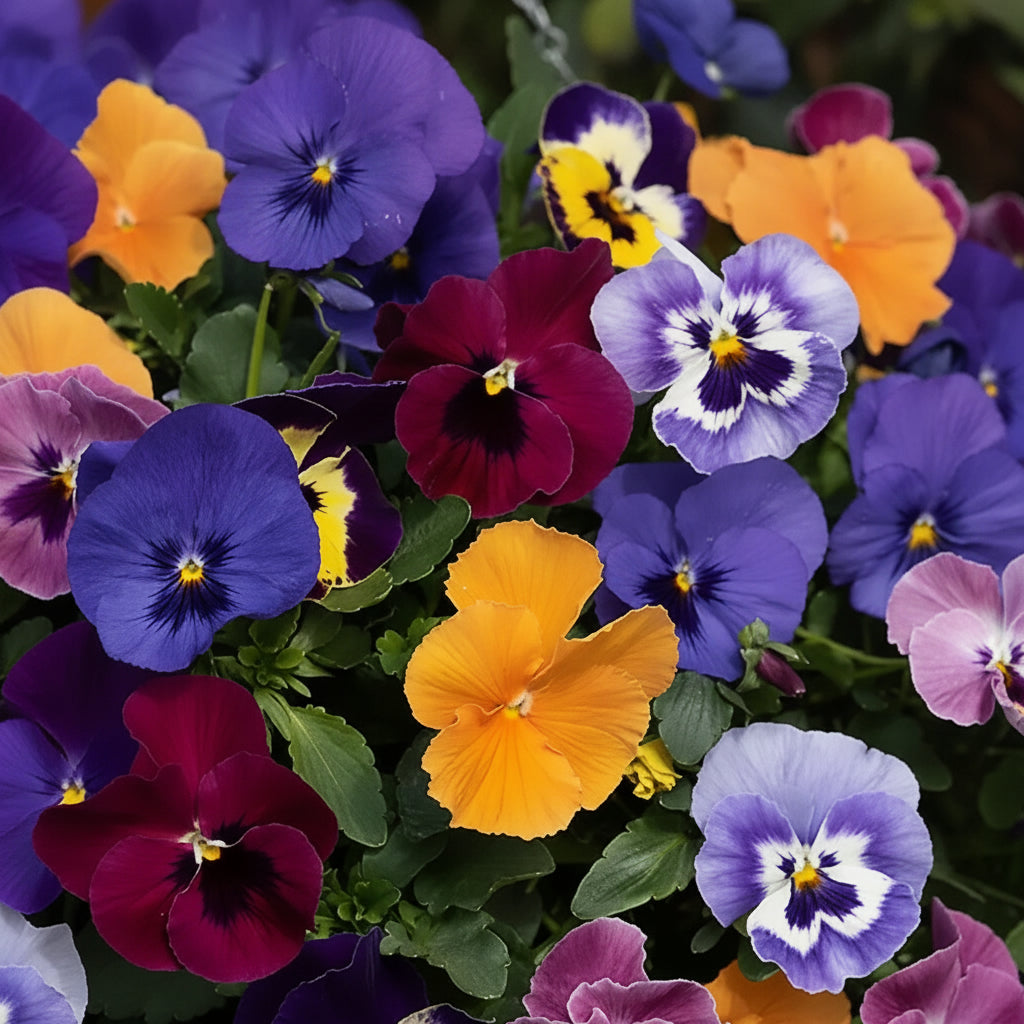
Home gardening has never been more popular across the continent. The Europe garden seed market was worth 1.16 billion in 2025, and it is still growing. According to Eurostat data from 2024, approximately 52% of households in the European Union engaged in gardening activities, with a significant portion dedicating space to edible plants. That is a remarkable level of participation, and it means more gardeners than ever are turning to online shops to source their seeds.
Buying garden seeds online across Europe is genuinely convenient. Specialist shops offer far wider variety than any local garden centre, and with multi-country shipping now common, customers from Budapest to Barcelona can order from a single, well-stocked catalogue. But ordering seeds digitally removes the ability to inspect packaging in person, which means knowing what to look for online becomes essential. This guide walks you through every checkpoint, from EU regulations and germination data to supplier trust signals and smart delivery practices, so that your next seed order arrives exactly as expected and gives your garden the best possible start.

Key Takeaways
-
The EU Common Catalogue matters: Before marketing in the EU vegetable varieties must be listed in the Common Catalogue based on EU countries' national catalogues. Always choose suppliers that sell registered varieties to avoid legal and quality complications.
-
Germination rate is the single most important quality signal: A germination rate of 90% or more is very good for most species; some species may have lower germination rates, but because the seed is small and/or abundant, a rate of 70% to 80% is perfectly acceptable. If a supplier cannot tell you their germination rate, look elsewhere.
-
The European garden seed market is growing fast, so is the choice: The Europe Vegetable Seed Market size is estimated at 2.61 billion in 2025, and is expected to reach 3.66 billion by 2030, growing at a CAGR of 6.96% during the forecast period. More suppliers means more choice, but also a greater need to distinguish quality from noise.
-
Organic certification in the EU carries real weight: In order to obtain the green EU logo and the mention "organic", products must be certified by a certification body approved by the competent authorities. An EU organic logo on a seed packet is a verified claim, not a marketing slogan.
-
Seed packets are not expiry-stamped like food: Many seed packets come with an expiration date which usually indicates the period during which the seeds are guaranteed to germinate, and this date can serve as a guideline for consumers as an optimal timeframe for planting. Always check the packed-for year and buy the most recently packed stock available.
Quick-Start Prioritisation Framework
The factors that matter most depend on what kind of gardener you are. Use this table to identify where to focus your attention first.
| Factor | Best For | Effort Level | Time to Results |
|---|---|---|---|
| Checking EU Common Catalogue registration | All buyers, especially vegetable growers | Low | Immediate |
| Verifying germination rate on each packet | Serious growers seeking high success rates | Low | Pre-purchase |
| Seeking EU Organic certification | Organic/sustainable gardeners | Low | Pre-purchase |
| Comparing heirloom vs. hybrid varieties | Gardeners who want to save seed or maximise yield | Medium | Weeks of research |
| Researching supplier trust signals and reviews | First-time buyers, new-to-a-supplier | Medium | A few hours |
| Confirming cross-border shipping and delivery terms | Buyers outside the supplier's home country | Low | Immediate |
Start here if you are:
-
A complete beginner: Focus on germination rates and supplier reputation first. These two factors determine whether seeds grow at all.
-
An organic gardener: Prioritise the EU Organic leaf logo and check for a certified body code on the packet before anything else.
-
Buying across EU borders: Confirm the supplier ships to your country and clarify any customs requirements before adding items to your basket.
Understanding EU Seed Regulations Before You Order
European seed law is considerably more structured than many shoppers realise, and understanding the basics protects you against wasted money.
The Common Catalogue and Variety Registration
The EU regulates the marketing of plant reproductive material of agricultural, vegetable, forest, fruit and ornamental species and vines, ensuring that EU criteria for health and quality are met. The mechanism for this is a registration system. The legislation maintains the basic principles that varieties have to be registered and certified before they can be placed on the market. Registration refers to the listing of a plant variety in a national catalogue after confirmation of its characteristics, that it is distinct from other varieties on the market, uniform and stable.
In practice, this means any reputable European online seed shop should only be selling vegetable varieties that appear in the EU Common Catalogue of Vegetable Species. In recent years, this legislation has allowed farmers freedom of choice, with over 50,000 varieties in the EU Common Catalogue. If a supplier offers an obscure variety not registered anywhere in Europe, ask them directly where the variety is catalogued. The answer will tell you a great deal.
The Plant Health Regulation Update (2025)
Buyers importing seeds from outside the EU should be aware of a significant regulatory update. New rules on plant health entered into force on 5 January 2025, following the adoption of Regulation (EU) 2024/3115, amending the Plant Health Regulation (EU) 2016/2031. Among other provisions, the new measures include increased phytosanitary guarantees and a more transparent procedure for granting temporary derogations from import prohibitions. For buyers ordering from within the EU internal market, this matters much less. The European Union applies strict regulations to plants that are sent from outside the EU, but there are no legal requirements for additional sanitary checks and certificates if you are shipping a plant that is grown and transported within the EU. This is one strong argument for choosing suppliers registered and operating within the EU.
Pro tip: When ordering vegetable seeds from an EU-based supplier, you are generally protected by harmonised quality standards that apply across all member states. For extra peace of mind, look for a supplier's registration number or business certificate on their website footer.
Germination Rates: The Number That Actually Predicts Your Harvest
Germination rate is the most reliable quality indicator available to an online seed buyer, yet it is often overlooked in favour of price comparisons.
What Germination Rate Really Means
The phrase "buy cheap, pay dear" is especially relevant when it comes to buying seeds. Cheap seeds, as tempting as they may be, are a false economy and the reason for this boils down to a few simple factors. The main factor is germination rate, the percentage of seeds in a batch that will actually sprout under correct conditions. A germination rate of 90% or more is very good for most species. Therefore, if you are comparing two suppliers and one lists an 85% germination rate while another lists 92%, the second represents meaningfully better value even at a higher price per packet.
Seeds that have a 95% germination rate may in fact sprout in real garden conditions at just 65% or slightly above. Seeds with an 85% lab germination rate might actually germinate at 50%. Seeds with a 75% germination rate may only have a practical germination rate of 15%. These figures highlight why buying from suppliers who publish genuinely high germination data, rather than vague assurances, matters so much.
Reading the Packet Date
Seed packets may have an expiration date printed on them, but those dates are rough guidelines; most vegetable seeds will last through their expiration date if kept cool, dry and away from sunlight. Still, always purchase seeds packed for the current growing season when possible. Check the date printed on the seed packet, purchase seeds packaged for the current growing season, and bear in mind that the germination percentage of seed goes down each year at a varying rate.
Different species have very different viability windows. Onions last around one year; corn and peppers around two; beans, carrots, and peas around three; beets, pumpkins, squash, tomatoes, and watermelon around four; and broccoli, cabbage, cucumbers, lettuce, and radish around five years under correct storage conditions. Use these benchmarks to judge whether a discounted "end of season" packet is still good value or simply old stock.
Pro tip: When you receive your order, check the packed-for year immediately. If a reputable supplier has accidentally sent you seeds from a previous season, contact their customer service before sowing. Good suppliers will replace old stock without argument.

Decoding Seed Types: Heirloom, Hybrid, and Open-Pollinated
The terminology on European seed websites can be confusing for new buyers. Understanding the differences helps you match seed type to gardening goals.
Heirloom Seeds
Heirloom seeds are open-pollinated varieties that have been passed down for generations, typically for at least 50 years. These botanical treasures carry rich cultural heritage, often preserving varieties developed by immigrant communities or indigenous cultures. Unlike modern varieties, heirloom seeds represent agricultural biodiversity that evolved through natural selection and careful saving by gardeners who valued specific traits.
The practical benefit for home gardeners is significant. The produce from heirloom seeds is generally more flavourful and robust. Some mass-produced hybrids have been developed for storage and shipping instead of the best flavour. The other key advantage is seed-saving: you can collect seeds from heirloom plants at the end of the season and sow them again next year with confidence that the offspring will match the parent. This makes heirlooms cost-effective over multiple seasons.
Hybrid (F1) Seeds
Hybrid plants are often cultivated to have characteristics gardeners may find desirable, such as disease resistance, larger fruit, higher yield, or more durability in shipping. For growers who want consistent, predictable results each year, hybrids deliver. The trade-off is cost and dependency: the seeds collected from hybrids won't produce the same fruits, vegetables, and flowers as their parent plants, so you'll need to buy seed packets every year. This is worth factoring into your long-term gardening budget.
Neither is inherently better, the right pick depends on whether you want to save seed indefinitely or want the most resilient plant this particular season. A mixed approach, heirlooms for flavour crops like tomatoes and hybrids for brassicas where disease pressure is high, works well for many European home gardeners.
Pros:
Heirloom seeds:
-
Superior flavour and variety compared to commercial hybrids
-
Seeds can be saved and replanted season after season
-
Greater genetic diversity and adaptability to local conditions
-
Often lower cost when seed-saving is practised
Hybrid (F1) seeds:
-
Consistent, predictable results each season
-
Typically higher yields and stronger disease resistance
-
Easier to grow for beginners with less horticultural experience
-
More uniform plant appearance and harvest timing
Cons:
Heirloom seeds:
-
May carry disease vulnerabilities that older genetics never needed to resist
-
Yield can be less consistent than hybrids
-
Require careful seed-saving discipline to maintain variety purity
Hybrid (F1) seeds:
-
Seeds cannot be saved and replanted true-to-type
-
Generally more expensive per packet than equivalent heirlooms
-
Less flavour complexity in some varieties
-
New packets must be purchased every growing season
What Organic Certification Actually Means on a Seed Packet
The word "organic" appears on many European seed websites, but its meaning is precise and legally defined, not a marketing choice any supplier can make freely.
The EU Organic Standard
In order to obtain the green EU logo and the mention "organic", products must be certified by a certification body approved by the competent authorities. Producers in Europe can only use the organic label when the product contains 95% organic agricultural products, and alongside the logo, producers must indicate the regulatory control body and where the farm of origin is located.
For seeds specifically, the requirements go further. In agriculture, cultivated land must transition to organic methods for at least two to three years before harvesting, with no use of synthetic pesticides, chemical fertilisers, or genetically modified organisms. Irrigation water, seeds, and production inputs must comply with EU-approved lists. When you see an EU organic leaf logo on a seed packet, it means the entire growing history of those seeds has been independently verified. This is a meaningful guarantee, particularly when you are growing food.
Some suppliers, such as those operating in the Netherlands and Germany, also carry national certifications like SKAL or Bioland alongside the EU mark. Organic seeds that have a SKAL quality mark and the ECO quality mark are registered with those certification bodies. These additional marks indicate a further layer of scrutiny and are worth looking for when the stakes are high.
Pro tip: If a supplier describes their seeds as "natural", "pesticide-free", or "eco-friendly" without displaying an actual EU organic certification code, treat those claims as unverified marketing rather than third-party-backed guarantees.
How to Assess a Supplier's Trustworthiness
Choosing a seed supplier online requires the same due diligence you would apply to any significant purchase, with a few gardening-specific additions.
Transparency About Growing Practices
Look for suppliers with transparent growing practices, positive customer reviews, and detailed catalogue descriptions. Check if they conduct their own germination tests and maintain quality control standards. A reputable supplier will tell you where their seeds are grown, who certifies them, and what germination rates were achieved in the most recent test batch. If this information is buried or absent, that is a warning sign.
Most seed packets will have a lot number on the packet, so if you are curious you can reach out to the seed company with the information listed on your seed packet and find out exactly what the germination rate is for that particular batch of seeds. A supplier willing to share lot-level germination data is confident in their quality, and that confidence is earned.
Customer Service and Guarantee Policy
When evaluating germination policies, look for clear terms: what percentage germination is guaranteed? What documentation do they require if seeds fail? How quickly do they respond to claims? A seed supplier confident in their product sources will offer straightforward policies because they know failure rates on quality genetics are minimal.
I have found, after years of ordering seeds online, that a supplier's returns policy tells you almost everything about how they view the customer relationship. Generous guarantees, replacement packets, credit, or refunds for genuine germination failures, signal a company with genuine confidence in their stock. In my experience, the shops that are hardest to contact before an order are the same ones that are hardest to reach after a problem.
Product Detail and Sowing Information
You can discover unique varieties not typically available locally, and when browsing through a seed catalogue or online seed store, you generally learn more details on each specific crop. A well-run seed shop provides days-to-maturity information, spacing guidance, climate suitability notes, and sowing calendars. If a product listing contains only a name and a price, look elsewhere.

Shipping Across Europe: What to Expect and Watch For
Multi-country shipping is a major selling point for online European seed shops, but there are practical details worth understanding before you order.
Intra-EU Orders: Generally Smooth
For buyers ordering seeds between EU member states, the process is typically straightforward. Seed and propagating material circulates freely throughout the European Union as long as it complies with EU quality standards. This means a buyer in Hungary, the Czech Republic, or Romania can order from a Dutch or German supplier without customs paperwork for standard vegetable and flower seeds.
Shops such as Holland Kertészet serve customers across multiple European countries, making it practical for gardeners throughout the region to access a wide range of quality seeds with a single order. When evaluating any multi-country supplier, confirm that their listed shipping destinations include your country, check delivery timeframes to your region, and verify whether a minimum order value applies to qualify for standard postage rates.
Packaging and Viability During Transit
Seed viability can be affected by conditions during transit, particularly on longer cross-border journeys. Seeds should be meticulously prepared and packaged in hermetic, barrier material packaging to protect them from light, temperature, and humidity fluctuations. To guarantee freshness, some suppliers repackage seeds in small quantities as the market season approaches, ensuring buyers receive the freshest, most recently harvested seeds.
Seeds should ideally be stored in dry, dark, and cool conditions to help them last as long as possible. Below 40% humidity is best. Warm, humid conditions are the worst for seed storage. If your order arrives in summer heat, unpack it promptly and transfer packets to a cool, dry location. This is especially important for onion, parsnip, and parsley seeds, which have the shortest viability window.
Pro tip: Order seeds early in the season, late winter or early spring is ideal for most European growing zones. This reduces the risk of heat damage during transit and gives seeds the longest possible time to be sown under optimal conditions.
Tracking and Returns
Reputable online seed shops should provide order tracking as standard. If a supplier does not offer tracking on international orders, factor that risk into your decision. Equally, confirm the returns policy before purchasing: a supplier that processes replacements or refunds for damaged or non-germinating seeds is considerably less risky than one with no stated policy.
Common Mistakes to Avoid When Ordering Seeds Online
Even experienced gardeners make avoidable mistakes when buying seeds digitally. These are the most frequent ones to watch for.
Ignoring Climate Suitability
A seed catalogue may contain hundreds of varieties, but not all of them are suited to your local climate. When browsing online catalogues keep in mind that many companies sell across multiple countries. Some of their plants may not be adapted or hardy in every region. Check good reference materials for the cultural requirements and the hardiness of plant materials. A tomato variety bred for southern Spanish summers will struggle on a cooler, wetter Hungarian hillside.
In my experience, the simplest fix is to email or chat with the supplier's team and ask directly: "Is this variety suited to [your region] conditions?" A knowledgeable team will give you a straight answer. If they cannot advise on suitability, their product knowledge may be thin.
Buying on Price Alone
The phrase "buy cheap, pay dear" is especially relevant when it comes to buying seeds. Cheap seeds are a false economy and the reason for this boils down to a few simple factors. A packet that costs half the price but carries a 60% germination rate leaves you with fewer seedlings per pound spent and more work to compensate for failures. Always calculate cost per viable seed, not cost per packet.
Ignoring the Packed-For Date
If your germination rate is less than 60%, consider buying new seeds or sowing your seeds extra thickly to compensate for the low germination rate. Old stock will put you in exactly this position. Always check the packed-for year. If a supplier is selling seeds packed more than two years ago at full price without disclosing the date, that is not transparent trading.
Overlooking Supplier Registration
The proposed EU Regulation revises the legislation applying to production and marketing of plant reproductive material by replacing 10 marketing Directives with a single Regulation, maintaining the basic principles that varieties have to be registered and certified before they can be placed on the market. A legitimate supplier operating within the EU will hold a business registration and, for organic claims, a certification body reference. These should be visible on the website. If they are not, ask.
Frequently Asked Questions
What does "standard seeds" mean under EU law?
When plant varieties are required to be registered on a national catalogue for an EU Member State, different categories of seeds can be produced and marketed: "commercial" seeds for agricultural plants, "standard" seeds for vegetable species, and "EC quality" seeds for vegetable young plants. The "EC quality" designation is the minimum acceptable level of quality in the EU. Standard seeds are the most common category available to home gardeners and represent fully compliant, field-inspected stock. When you see "standard" on a European seed packet, it confirms the variety is registered and has met official quality criteria.
How do I verify that an online seed supplier is legitimate?
Start your seed supplier research by examining company histories and production methods. Look for suppliers with transparent growing practices, positive customer reviews, and detailed catalogue descriptions. Check if they conduct their own germination tests and maintain quality control standards. Also look for a physical business address, a company registration number, visible certification logos (organic, quality marks), and a clear returns policy. A genuine business will display all of these openly.
Can I order vegetable seeds from another EU country without customs issues?
The European Union applies strict regulations to plants that are sent from outside the EU, but there are no legal requirements for additional sanitary checks and certificates if you are shipping a plant that is grown and transported within the EU. For standard vegetable and flower seeds moving between EU member states, customs clearance is not an issue. If you are ordering from a country outside the EU, the situation differs, always check current import requirements with your national agricultural ministry.
What is the difference between a packed-for date and an expiration date?
Many people see a year written on the back of a seed packet and think this is an expiration date. While seeds do lose viability over time, they do not have standard expiration dates like packaged food. The packed-for year indicates when the seeds were tested and certified to meet germination standards for sale. Most species remain usable well beyond that year if stored correctly, though onion and parsnip seeds are notable exceptions that should ideally be used in the first season.
Is F1 hybrid seed the same as GMO seed?
No. Hybrid seed is a product of breeding and selection and does not undergo the laboratory interventions that are needed for genetic modification. F1 hybrids are produced by controlled cross-pollination of two parent varieties. GMO (genetically modified organism) seeds involve direct laboratory alteration of genetic material, which is a separate and more tightly regulated category. For home gardeners in the EU, GMO seeds are effectively not commercially available.
Why do some seed packets show a certification code like "DE-ÖKO-xxx"?
The EU organic leaf logo is widely used for packaged organic products. You will often see a code indicating the certifying body and country. Labels may also mention the origin of agricultural ingredients. The code tells you which specific certification body independently audited and approved the producer. In Germany, for example, "DE-ÖKO-001" refers to a specific certifying authority. This traceability is a legal requirement under EU Regulation 2018/848 and gives organic labels genuine credibility.
Closing Thoughts
Buying garden seeds online across Europe is a genuinely rewarding experience when you know what signals to look for. The combination of EU-wide variety registration, organic certification standards, and the transparency requirements on legitimate supplier websites gives you strong consumer protection compared to many other categories of online purchase. The key is to apply that knowledge actively: check germination rates, verify packed-for dates, confirm the variety appears in the Common Catalogue, and choose suppliers who are transparent about their stock provenance and guarantee policies.
Whether you are sowing a small balcony kitchen garden or a large vegetable plot, the choices you make before checkout will define your results. Take five minutes to check the signals outlined in this guide, and you are already well ahead of most buyers.
Sources
-
Europe Garden Seed Market Size, Share & Growth, Market Data Forecast. European garden seed market size, growth statistics, and household gardening participation. https://www.marketdataforecast.com/market-reports/europe-garden-seed-market
-
Plant Reproductive Material, European Commission (DG SANTE). EU regulation of seed marketing, quality standards, and the Common Catalogue. https://food.ec.europa.eu/plants/plant-reproductive-material_en
-
EU Marketing Requirements for Vegetable Seeds, European Commission. Requirements for listing vegetable varieties in the EU Common Catalogue. https://food.ec.europa.eu/plants/plant-reproductive-material/legislation/eu-marketing-requirements_en
-
Amended Plant Health Law Enters into Force, European Commission Newsroom. Changes from Regulation (EU) 2024/3115 effective 5 January 2025. https://ec.europa.eu/newsroom/sante/items/863517/en
-
EU Seed Marketing Legislation, SEMAE (French Interprofessional Organisation for Seeds and Plants). Overview of seed categories, quality standards, and marketing rules. https://www.semae.fr/en/eu-seed-marketing-legislation/
-
Future of EU Rules on Plant Reproductive Material, European Commission. Proposed regulation replacing 10 marketing Directives with a single regulation. https://food.ec.europa.eu/plants/plant-reproductive-material/legislation/future-eu-rules-plant-and-forest-reproductive-material_en
-
How to Store Seeds and Test Germination Rates, Iowa State University Extension (Yard and Garden). Germination rate benchmarks and seed storage guidance. https://yardandgarden.extension.iastate.edu/how-to/how-store-seeds-and-test-germination-rates
-
Seed Germination, What Does It Mean?, Fontana Seeds. Practical germination rates versus lab rates explained. https://www.fontanaseeds.com/pages/seed-germination-what-does-it-mean-fontana-seeds
-
Germination Rates, What Do They Actually Mean?, Seeds 'n Such. How to read and use germination rate data from seed packets. https://seedsnsuch.com/blogs/gardeners-greenroom/germination-rates-what-do-they-actually-mean
-
Do Seeds Expire? How to Know If Yours Are OK to Plant, Park Seed / AOL. Expert guidance on seed expiry dates and viability windows by species. Iowa State University Extension provides guidance on seed storage and expected viability by species.
-
Tips for Purchasing Seeds, Iowa State University Extension. Guidance on checking seed dates and buying for the current season. https://yardandgarden.extension.iastate.edu/how-to/tips-purchasing-seeds
-
Organic Agriculture Certification in the EU, Ecocert. How producers obtain the EU organic logo and requirements under Regulation (EU) 2018/848. https://www.ecocert.com/en-US/certification-detail/organic-farming-europe-eu-n-848-2018
-
The Meaning of the Organic Label in the EU, AgDaily. Comparison of EU and US organic labelling requirements including the 95% threshold. https://www.agdaily.com/insights/meaning-of-organic-label-in-us-vs-eu/
-
Organic Certifications Explained, Organic Food Guides. EU organic leaf logo and certifier code system explained. https://organicfoodguides.com/organic-certifications/
-
7 Ways to Assess Seed Provenance and Quality, FarmstandApp. Guidance on researching supplier trust signals and germination standards. https://www.farmstandapp.com/63678/how-to-assess-seed-provenance-and-quality/
-
Europe Vegetable Seed Market Size, Research and Markets. Market size data, hybrid seed dominance, and growth forecasts to 2030. https://www.researchandmarkets.com/report/europe-vegetable-seed-market
-
Heirloom vs Hybrid Seeds, Shido / Chive.com. Practical comparison of heirloom and hybrid seed characteristics and best-fit scenarios. https://chive.com/blogs/plant-tips/heirloom-vs-hybrid-seeds
-
Hybrid vs. Heirloom Seeds, University of Connecticut Extension (Home Garden). Seed type explanations including open-pollinated and GMO distinctions. https://homegarden.cahnr.uconn.edu/?p=17411
-
Shipping Plants Internationally by Courier, Eurosender. Rules for shipping seeds and plants within and outside the EU. https://www.eurosender.com/en/pack-ship/plants
-
Testing Seed Viability, University of Wisconsin Extension (Dane County). Seed viability by species and proper storage conditions. https://dane.extension.wisc.edu/2023/02/17/12915