
Introduction: The Garden Through a Rabbit’s Eyes
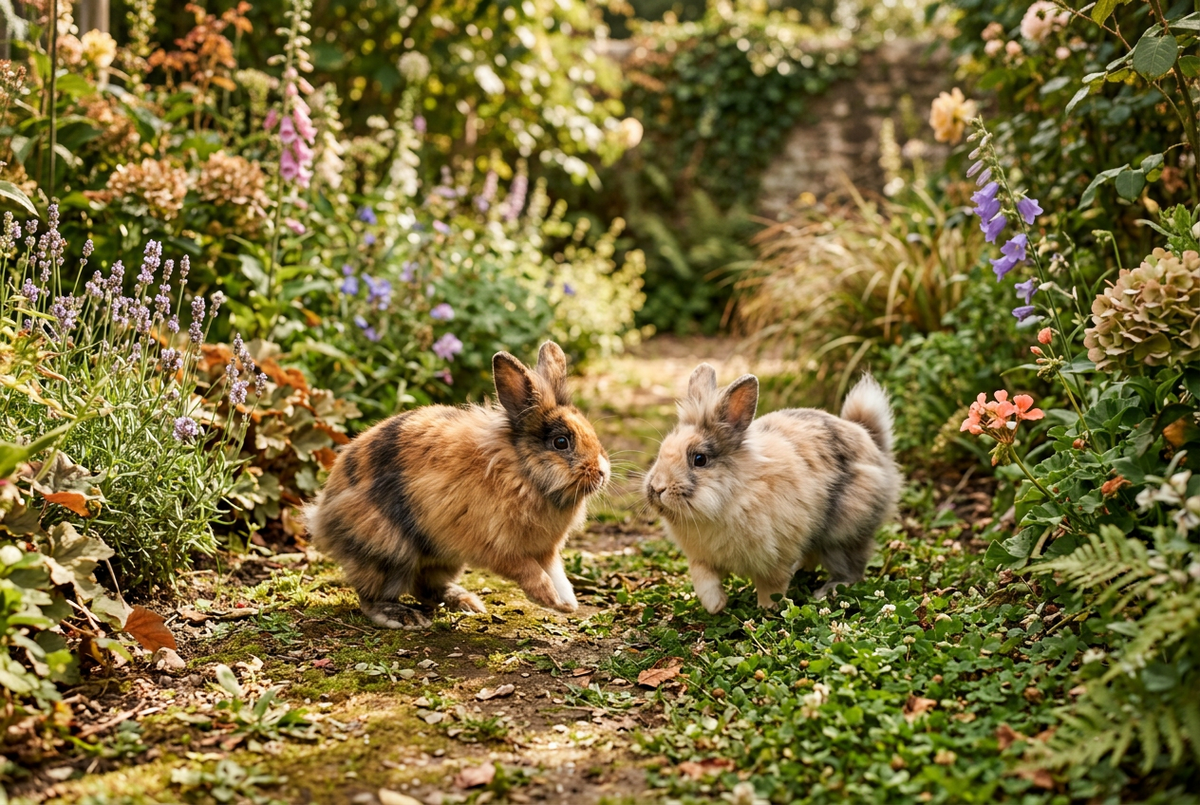
Imagine opening the back door on a beautiful spring morning and seeing two rabbits racing across their run, stopping to investigate a clump of grass, then stretching out together in the sunshine. Rabbits bring wonderful life and character to a garden. Their twitching noses, sudden joyful leaps and quiet companionship can make even an ordinary afternoon feel special.
But a rabbit does not see our garden as a decorative collection of flowers. To a rabbit, it is a landscape of possible meals, tunnels, hiding places, scents and dangers. A delicious-looking leaf might be poisonous. A beautiful lawn might have been treated with chemicals. A comfortable-looking hutch might be far too small for a healthy life.
In this guide we will look at what rabbits really need, how to make a garden enriching without putting them at risk, and how to protect your plants at the same time. The advice is tailored to the changing seasons of Hungary, where summer heat can be intense and winter brings cold, damp and wind.
1. What Makes a Rabbit Feel Happy?
Rabbits are prey animals. Their wellbeing depends on being able to move freely, hide when startled, explore and spend time with compatible companions. A rabbit that sits quietly all day is not necessarily content: it may be bored, frightened or unwell.
Watch for normal behaviours such as grazing, digging, exploring, grooming and resting beside a bonded partner. A joyful rabbit may suddenly leap, twist or sprint; rabbit owners call this a “binky.” A relaxed rabbit may stretch out with its hind legs behind it. Neither behaviour on its own proves perfect health, but both can be lovely signs of comfort.
Offer choices. Provide open space for running, sheltered corners for retreating, raised lookout points that are low and stable, and several routes between them. Rabbits thrive when they can decide whether to rest, forage or investigate.

2. Rabbits Need Rabbit Friends
Human attention is valuable, but it does not replace the company of another rabbit. Rabbits are social animals and generally do best with a compatible, bonded companion. A neutered male and a spayed female are often a successful pairing, although personalities and careful introductions matter more than a simple formula.
Never put two unfamiliar rabbits together and hope they work things out. Fighting can cause serious injury. Introductions should be gradual and carefully supervised, ideally with help from a rabbit-experienced rescue or veterinarian.
Guinea pigs are not suitable substitute companions: their communication and dietary needs differ, and they can injure one another. A well-bonded pair of rabbits will often rest, groom and explore together.
3. A Hutch Is a Bedroom, Not a Whole Home
A small wooden hutch may look charming among the flowers, but it is not enough on its own. Rabbits need a large, secure living area accessible day and night, with room to run, stand upright, stretch fully and make several uninterrupted hops. As a useful welfare benchmark for a pair of average-sized rabbits, plan for a permanently accessible area of at least approximately 3 m by 2 m by 1 m high, and larger whenever possible.
Provide a dry, insulated sleeping compartment connected to a secure run. Ensure good ventilation without drafts blowing directly onto resting animals. Use comfortable, clean bedding and a non-slip surface; wire flooring can damage feet.
A rabbit enclosure needs protection on every side, including the roof and the ground. Foxes, dogs, martens and other predators can climb, dig or squeeze through surprisingly small gaps. Strong welded mesh, secure latches and a buried barrier or solid perimeter help keep animals safe. Lightweight chicken wire is not a reliable predator-proof enclosure.

4. Shade, Fresh Air and the Danger of Summer Heat
Hungarian summers can be especially difficult for rabbits. Their dense coats make it hard to lose excess heat, and heatstroke can develop quickly. A run that is shady at breakfast may become dangerously hot by lunchtime.
Provide deep shade throughout the day, good airflow and multiple bowls of fresh, cool water. Ceramic bowls are often easier to drink from than bottles alone. Cool tiles or wrapped frozen water bottles can provide optional cool resting spots, but rabbits must be able to move away from them.
Never leave rabbits in a greenhouse, closed shed or sun-trap enclosure. Signs such as weakness, rapid breathing, collapse or unusual lethargy require immediate veterinary help. Heatstroke is an emergency. Avoid suddenly immersing a rabbit in icy water; contact your veterinarian for safe cooling instructions.
5. What Should Rabbits Eat?
For most healthy adult rabbits, unlimited good-quality grass hay should be the foundation of the diet. Hay provides the fibre needed for normal digestion and helps wear down continuously growing teeth. Fresh grass is useful too, but introduce it gradually, particularly after winter.
Offer a daily selection of suitable leafy greens, such as romaine lettuce, certain culinary herbs and clean, correctly identified edible weeds. Introduce new foods one at a time and in small amounts. A measured portion of appropriate plain rabbit pellets may be used according to body size and veterinary advice. Sugary treats, bread, biscuits and seed mixes are not suitable staples.
Fresh water must always be available. Rabbits cannot safely go without food for long. If a rabbit stops eating or producing droppings, seek urgent veterinary advice; gastrointestinal stasis can be life-threatening.

6. A Little Edible Garden Just for Rabbits
One of the pleasures of keeping rabbits is growing some of their food. A separate, untreated bed of herbs and greens can make feeding more interesting. Parsley, coriander, basil, dill and suitable leafy greens can be offered as part of a varied diet, provided they are introduced gradually.
Dandelion leaves and plantain can also be useful forage when correctly identified and collected from places free of chemicals, animal contamination and road pollution. Avoid assuming that a plant is safe because a wild rabbit appears to eat it.
For long-term use, choose plants that regrow after careful harvesting. Grow them outside the enclosure and bring in clean portions; otherwise enthusiastic rabbits may eat the whole crop in an afternoon.
7. Poisonous Plants: A Garden Danger We Must Respect
Many popular ornamentals should be kept away from rabbits. Foxglove, oleander, yew, autumn crocus, lily of the valley and many bulb plants are examples of plants that can cause serious harm. Rhododendrons and azaleas are also unsafe. Plant toxicity depends on species, plant part and quantity, so this is not a complete list.
Do not rely on rabbits instinctively avoiding poisonous plants. Fence ornamental beds securely, remove fallen cuttings and keep stored bulbs inaccessible. Never feed unidentified leaves, clippings or bouquets.
If you suspect that a rabbit has eaten a toxic plant, contact a rabbit-experienced veterinarian immediately and, if possible, take a photograph or sample of the plant. Do not attempt home remedies or induce vomiting: rabbits cannot vomit.

8. Digging, Tunnels and Enrichment
Rabbits love to dig. It is normal behaviour, not mischief. A dedicated digging box filled with safe soil or shredded paper can protect your flower beds while giving them something satisfying to do.
Provide sturdy tunnels with more than one exit, cardboard boxes without staples or tape, safe untreated branches for chewing, and hay hidden in different locations. Rearrange enrichment occasionally while keeping familiar sleeping areas consistent.
Avoid plastic items that can be chewed and swallowed, string that can entangle, and high platforms from which a rabbit could fall. Rabbits have delicate backs; handle them gently, supporting both chest and hindquarters, and never lift them by the ears.
9. Protecting Your Vegetable Garden and Flower Beds
Rabbits can remove tender seedlings in minutes. A row of lettuce, newly emerging beans or young flowers can be irresistible. Rather than expecting them to ignore tempting plants, design a separate rabbit-safe area and protect valuable beds with strong, properly fitted barriers.
Raised beds can help, but determined rabbits may still reach plants or dig around edges. Fencing must be secured at ground level, and gates should close firmly. Keep pesticides, slug pellets, fertilisers and treated compost away from rabbit areas.
An attractive compromise is to plant flowers around the outside of the secure rabbit enclosure, where they can be enjoyed but not eaten. Leave a gap so leaves cannot grow through the mesh into reach.
10. Health, Hygiene and Veterinary Care
Rabbits are very good at hiding illness. Check their appetite, droppings, posture, movement and behaviour every day. A rabbit sitting hunched, grinding its teeth loudly, producing fewer droppings or refusing food needs prompt attention.
Ask a rabbit-experienced veterinarian about vaccination against myxomatosis and rabbit haemorrhagic disease, including current vaccine availability and schedules in Hungary. Neutering can help prevent unwanted litters and certain health problems; spaying females is particularly important because of the risk of uterine disease.
Check the hindquarters daily in warm weather. Flystrike, when flies lay eggs that develop into maggots, can become fatal very quickly. Keep bedding dry, manage soiling, and obtain urgent veterinary care for any signs. Regular nail checks, dental assessment and parasite advice also matter.
11. Rabbits Through the Hungarian Seasons
SPRING: Introduce fresh grass gradually, inspect fences after winter and check that your rabbits are up to date with veterinary care. Begin preparing reliable summer shade before the first heatwave.
SUMMER: Prioritise shade, airflow, water and daily checks for flystrike. Avoid handling or transport during the hottest hours whenever possible.
AUTUMN: Keep the enclosure dry as rainfall increases, check roofing and drainage, and store enough good hay for winter. Avoid abrupt diet changes when fresh grazing declines.
WINTER: Healthy, acclimatised outdoor rabbits can tolerate cool conditions when they have a dry, draught-free, insulated shelter, companions and plenty of hay. Protect water from freezing and keep ventilation adequate. Very young, sick or frail rabbits may need a different arrangement planned with a veterinarian. Avoid moving outdoor rabbits abruptly between freezing conditions and centrally heated rooms.

12. Children, Dogs and Other Garden Visitors
Rabbits can be wonderful animals for families, but they are not cuddly toys. Many dislike being picked up, even when they enjoy gentle stroking at ground level. Teach children to sit quietly and let rabbits approach voluntarily.
Dogs and cats should never be assumed safe with rabbits simply because they appear calm. Predator scent and sudden movements can be stressful, and a playful dog can seriously injure a rabbit. Maintain secure separation unless supervised by an experienced adult with a carefully managed plan.
Visitors should be asked not to feed treats through the enclosure. A simple sign on the gate can prevent well-intentioned but unsuitable feeding.
13. Before Bringing Rabbits Home: A Practical Checklist
Before adopting, ask yourself: Is the enclosure large enough for permanent movement? Is it secure from predators above and below? Can I provide a bonded pair, unlimited hay, fresh water and shade? Is there a rabbit-experienced veterinarian nearby? Can I afford routine care and emergencies?
Rabbits may live for eight to twelve years or longer with good care. They need daily attention even when you are on holiday, and they may damage grass or garden plants if boundaries are not thoughtfully designed.
Adopting a bonded pair from a reputable rescue can be a wonderful choice. Ask about temperament, diet, vaccination, neutering and any existing health conditions.
Frequently Asked Questions
Can rabbits live outside all year in Hungary? Some healthy, acclimatised rabbits can, with suitable housing, companionship and careful protection from heat, wet weather and extreme cold. Individual health matters.
Will rabbits keep my lawn short? They graze, but they are not lawnmowers. A rabbit-safe run needs more than grass, and overgrazed or contaminated patches need management.
Can I give rabbits carrots every day? Carrots are relatively sugary and are better treated as occasional small treats, not the basis of a diet.
Can I keep just one rabbit? Rabbits generally benefit greatly from a compatible rabbit companion; seek advice on bonding and neutering.
What if my rabbit suddenly stops eating? Contact a rabbit-experienced veterinarian urgently rather than waiting until tomorrow.
Final Thoughts: A Garden That Belongs to Everyone
A rabbit-friendly garden does not need to be elaborate. What matters is a secure home, room to run, a rabbit friend, nourishing food, places to hide and people who notice the small details of everyday wellbeing.
When we design our gardens with animals in mind, we begin to notice them differently. A patch of shade becomes essential summer comfort. A tunnel becomes a source of confidence. A handful of fresh herbs becomes an opportunity for exploration.
With thoughtful planning, your rabbits can enjoy a rich, active life while your flowers and vegetables remain protected. And perhaps the loveliest reward is sitting quietly nearby, watching two contented rabbits explore a little world you have made safe for them.
Happy gardening from Holland Kertészet - where a beautiful garden can be a welcoming home for plants, people and our much-loved animal companions.