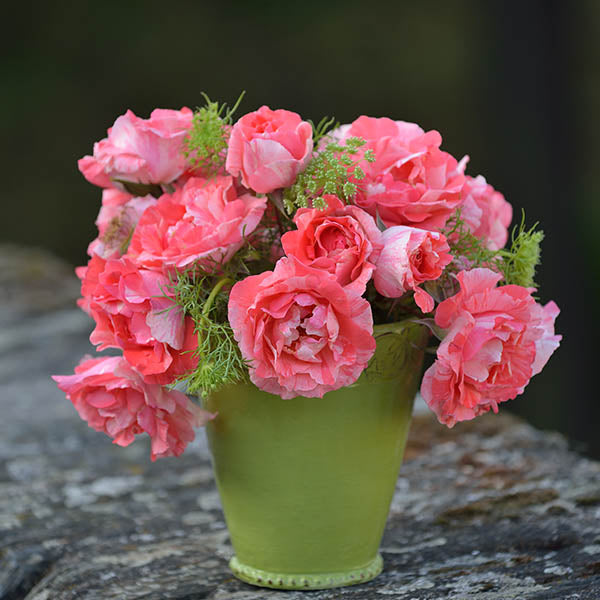

Come in the garden with me . . .

Aster
From Tiny Seeds to Armfuls of Late-Summer Flowers A friendly guide to sowing, growing, cutting and enjoying summer asters in Hungary. Come Into the Garden With Me... Today, we're growing asters. But before you picture a tall purple perennial flowering beside the fence in October, I need to introduce you to a different aster entirely. The star of this book is the summer aster, Callistephus chinensis, also called China aster or annual aster. It is grown from seed in spring, flowers in summer and autumn, and then finishes its life when frost arrives. For us in Hungary, they fit beautifully into the second half of the garden year. Spring gets the tulips and ranunculus. Early summer has its roses and poppies. Then, just when some beds are beginning to look a little tired, the asters start finding their confidence. This time, we are growing the compact pink variety in the Holland Kerteszet range: Bambina Rose. It stays around 30 cm high, so it is not one of those asters that needs to be hidden at the back of a border. It can sit right where we can enjoy it - in a pot, along an edge, on a balcony or in a cutting patch. We will start with seed, work through sowing and transplanting, learn how much sun and water asters want, talk about Hungarian summer heat, pests and the rather important subject of aster wilt, and then finish with cutting flowers and saving seed. By the end, I want you to look at a packet of aster seed and know exactly what happens next. Ready? Let's grow some late-summer colour. 1. Meet the Summer Aster The first useful thing to know is that summer aster is not technically an Aster at all. Botanically it is Callistephus chinensis, a member of the daisy family, Asteraceae. The old common name has simply stuck - as common names often do. Annual, not perennial This matters because there are many perennial plants commonly called asters. Those return from the roots year after year. Callistephus chinensis does not. We sow it, grow it, enjoy its flowers, and after frost we clear the plants and begin again next spring. What does it look like? Summer asters are upright, branching plants with green, slightly toothed leaves and flowerheads held above the foliage. Depending on the variety, flowers may be single, semi-double or very full and double. The species can grow quite tall, but modern cultivars range from compact bedding plants to long-stemmed cutting varieties. Bambina Rose sits firmly in the compact camp, at around 30 cm. When does it flower? Think summer into autumn. With a good spring start, flowers usually arrive after the garden has moved beyond its earliest displays and can continue into cooler autumn weather until frost ends the season. GOOD TO KNOW When gardeners say 'aster', they may mean several completely different plants. In this book we are talking about Callistephus chinensis - the annual summer or China aster - not the hardy perennial autumn asters. 2. Finding the Right Place Before we sow, let's walk around the garden. For summer asters we are looking for three things: sunshine, fertile soil that drains well, and enough air movement around the plants. Give them sun Asters flower best in full sun. In a Hungarian garden, a position with at least six hours of direct light is a very good starting point. Moist, but well drained Unlike some of our drought-loving flowers, asters do not want to spend long periods completely dry. They grow best when the soil remains reasonably and consistently moist while still draining freely. This is one of those gardening balances that sounds complicated until you feel the soil with your fingers. We do not want dust. We do not want mud. We want soil that holds enough moisture for the roots but allows excess water to escape. Hungarian summer changes the rules A sunny bed near Budapest, Szeged or on the Great Hungarian Plain can become very hot in July and August. Aster plants in the ground may cope well if their roots have access to moisture, but a small pot can dry very quickly. Air circulation matters Do not squeeze asters tightly into a damp corner. Good airflow helps leaves dry after rain and reduces the conditions that encourage disease. A COMMON MISTAKE Seeing that asters like moisture and translating that as 'keep them wet'. Moist soil supports growth. Waterlogged soil invites root problems. Always let excess water drain away. 3. The Aster We Grow With You At Holland Kerteszet, the current aster in our seed range is Summer Aster - Bambina Rose, sold in packets of 20 seeds. Bambina Rose Bambina Rose is a compact summer aster producing many beautiful full pink flowers with a yellow centre. It grows to around 30 cm, which gives it a very different personality from the tall florist asters that can reach almost a metre. Pink without being shy The flower shape is full and generous, but the visible yellow centre keeps it recognisably aster-like. The soft rose colouring is easy to combine with both warm and cool palettes. Why I like compact asters A flower does not need to be tall to earn a place in the garden. Bambina Rose can bring the same late-summer colour at a scale that suits smaller spaces. GROW WITH US Bambina Rose is the summer aster currently in the Holland Kerteszet range. Grow a few in the ground and a few in containers if you can. By autumn, you will know exactly which position it prefers in your own garden. 4. Let’s Sow Asters This is where the whole summer begins: with twenty small seeds and a little faith. When to sow in Hungary The Bambina Rose packet gives us several useful choices. You can sow under glass from mid-March to mid-April, sow outdoors in a seedbed from mid-April to mid-May, or sow more broadly outdoors from the end of March through May when conditions are suitable. For beginners, I like starting at least some seeds under protection. It gives us more control over moisture, temperature and hungry garden visitors during those first delicate weeks. Starting under protection Fill small pots or modules with a fine seed compost and moisten it before sowing. Place the seeds on the surface and cover lightly according to the packet directions. Keep them around the mild indoor spring temperatures asters prefer, with good light once germination begins. Do not put the tray on a scorching radiator. We are growing seedlings, not baking them. Direct sowing If the soil is workable and weather is mild, you can sow outdoors in rows or a prepared seedbed. Fine the soil first, remove large stones and weeds, and water gently after sowing. DON’T PANIC Aster seedlings do not need to race. Strong, compact seedlings are more useful than tall, pale ones. If they stretch toward a window, give them more light rather than more fertiliser. 5. From Seedling to Garden Plant Once the first true leaves appear, our anonymous little green sprouts begin looking like proper plants. Potting on If seedlings are crowded, move them carefully into individual modules or small pots once they are large enough to handle. Hold them by a leaf rather than pinching the stem. Hardening off Indoor-raised seedlings need a gradual introduction to outdoor life. Hungarian spring can give us a warm afternoon followed by a surprisingly cold night, and a windowsill seedling has no idea what wind feels like. Over a week or more, place the young plants outside in a sheltered position for increasing periods, bringing them back under protection when conditions are too cold. Gradually expose them to brighter light and normal outdoor temperatures. When to plant out Summer asters are not frost-proof. Move them permanently outside once the danger of significant frost has passed and the plants are well hardened. Spacing Bambina Rose is compact, but compact does not mean crowded. Give each plant room for air to move and branches to develop. Crowding encourages competition and disease. In containers, several plants can make a beautiful display, but choose a pot large enough to hold moisture during summer and still allow drainage. Water them in Newly transplanted plants need reliable moisture while roots establish. Water thoroughly after planting, then check the soil rather than automatically watering every day. WHAT I WOULD DO I would plant Bambina Rose in groups rather than dotting single plants all over the garden. Three, five or seven plants together create a far stronger patch of pink and make the small variety feel intentional. 6. Growing Strong, Flowering Plants Now the easy-looking part begins. The plants are in the garden, but we are not quite allowed to forget about them yet. Watering through Hungarian summer Asters prefer consistent moisture. During a normal spring, rainfall may do much of the work. During a hot, dry Hungarian summer, you may need to help regularly. Water deeply enough to reach the root zone rather than sprinkling the surface every few hours. If possible, water the soil rather than soaking the leaves, especially late in the day. Feeding Asters appreciate fertile soil, particularly if you want generous flowering. Compost incorporated before planting gives them a good foundation. Container plants may need occasional feeding because nutrients wash from pots more quickly. Use a balanced or flowering-plant feed according to its instructions. More is not better; we want sturdy growth and flowers, not soft, overfed foliage. Deadheading As flowers fade, remove them if you want the plant to keep directing energy into fresh buds rather than seed. Regular deadheading also keeps a pot or front border looking fresh. GOOD TO KNOW Summer aster is sometimes described as a cool-weather annual. In Hungary that does not mean it cannot flower in summer; it means plants appreciate steady moisture and often look especially good as the harshest heat begins to soften toward late summer. 7. When Something Goes Wrong Asters are beautiful, but this is one plant where prevention matters. The most important problem to know is wilt disease. The plant suddenly wilts If one plant wilts despite moist soil, yellows, collapses or develops darkened stems, do not immediately assume it simply needs more water. Asters are prone to soil-borne wilt diseases, including Fusarium and Verticillium-type wilts. Remove badly affected plants rather than composting suspicious diseased material, keep tools clean, and avoid repeatedly planting asters in exactly the same soil year after year. Rotate the planting place This is one of the most useful habits with annual asters. Move them around the garden from season to season where possible. Rotation does not magically remove every disease, but it reduces the repeated pressure of susceptible plants occupying the same soil. Aphids Check tender growth and flower buds for aphids. A few can often be removed by hand or washed off. Large colonies are easier to manage when discovered early. Leaves staying wet Crowded plants with poor airflow are more likely to suffer fungal problems. Space properly, water at soil level when practical and avoid leaving foliage wet overnight. A COMMON MISTAKE Treating every wilted aster as a thirsty aster. Check the soil first. If the soil is moist and one plant is collapsing while its neighbours look fine, investigate disease or root damage before adding more water. 8. Flowers for the Garden and the Vase And then, one morning, the buds that have been swelling for days finally open. Bambina Rose gives us full pink flowers with a yellow centre, and because the plants are compact, the blooms seem to sit almost like a little cushion of colour above the foliage. In the garden For the strongest effect, grow several together. A single compact aster can disappear visually. A group becomes a proper feature. Use them along paths, in front borders, around a terrace or in containers where the flowers are close enough to appreciate. For cutting Bambina Rose can also be used as a cut flower. Choose stems with fresh, newly opened flowers and buds still developing where possible. Cut in the cooler part of the day, use clean snips and place stems into clean water promptly. Remove leaves that would sit below the waterline. What should we combine them with? Because the flower is full and rounded, it looks particularly good beside something lighter and more open. Keep picking or deadheading The more consistently you remove spent blooms, the longer the display can remain tidy and productive before frost arrives. TRY THIS Cut a small handful of Bambina Rose for a short vase instead of waiting for long florist stems. Compact flowers can make beautiful low table arrangements, especially mixed with a little airy foliage. 9. Autumn, Frost and Saving Seed Asters have one more trick: they often look happiest when the rest of the garden begins to relax. Cooler nights As August moves into September, cooler nights can make late-summer gardening much more pleasant for both us and the plants. Keep watering during dry periods and continue deadheading if you want more flowers. Then frost arrives Callistephus chinensis is an annual and is not reliably frost hardy. Once a proper autumn frost blackens the plants, the season is over. Pull up healthy plants and clear the bed. If any showed suspicious wilt or serious disease, dispose of them separately rather than leaving infected material in place. Can I save seed? Yes, if you allow selected flowers to mature fully. Leave a few of the healthiest flowers on the plant instead of deadheading them, and let the heads become dry and papery. Collect seed on a dry day and store it in a labelled paper envelope somewhere cool and dry. GOOD TO KNOW With asters, good garden hygiene is part of good growing. Clear diseased plants, avoid replanting in the same spot every year, and start next season with clean seed and clean trays. 10. Your Aster Cheat Sheet From twenty seeds to late-summer flowers - here is the whole journey in one place. 1. Know which aster you are growing. This book is about annual Callistephus chinensis, not perennial autumn asters. 2. Choose full sun and a sheltered, well-drained position. 3. Keep the soil reasonably moist, especially while plants establish and during hot weather. 4. Sow Bambina Rose under protection from mid-March to mid-April if you want an early controlled start. 5. Alternatively sow outdoors from spring into May when conditions are suitable. 6. Give seedlings bright light so they stay compact. 7. Pot crowded seedlings on once they are large enough to handle. 8. Harden indoor-raised plants gradually before permanent outdoor planting. 9. Plant out after significant frost danger has passed. 10. Give plants enough spacing for air circulation. 11. Water deeply rather than constantly sprinkling the surface. 12. Take sudden wilt seriously and remove suspicious plants. 13. Rotate asters to a different part of the garden in following years where possible. 14. Expect frost to finish the season - then start planning next year's colours. If You Remember Only Five Things... 1. This is the annual aster Callistephus chinensis grows from seed, flowers in one season and does not behave like a hardy perennial autumn aster. 2. Give it sun, moisture and drainage Asters like reliable moisture but hate waterlogged soil. Good light and good drainage keep growth strong. 3. Do not crowd the plants Air circulation matters. A little space is one of the easiest forms of disease prevention. 4. Learn the difference between thirst and wilt If a plant collapses while the soil is already moist, investigate before reaching for the watering can. 5. Let asters own late summer Their timing is part of their charm. When other flowers begin slowing down, asters can make the garden feel freshly dressed again. One Last Walk Around the Garden Do you remember where we started? Twenty small seeds. We sowed them while Hungarian spring was still making up its mind. We watched for the first leaves, moved the seedlings into more space, carried them outside for hardening off, and waited until frost danger had finally passed. The plants branched. The buds appeared. July became hot, the pots needed more water, and we learned that asters like moisture but not wet feet. Then the flowers opened. Next year, you will sow with more confidence. You will know where the soil stays moist without becoming soggy. You will know which container dries too fast. You will remember to leave space between plants and to rotate the planting place. Cut a few. Leave a few for the bees. Let the rest brighten the garden until frost finally closes the season. And when you're ready for the next packet of seeds... Come into the garden with me.
Read more