
From Tiny Seeds to Little Yellow Suns on Stems
A friendly guide to sowing, growing, cutting and drying Craspedia in Hungary.
Come Into the Garden With Me…
Today, we're growing Drumstick.
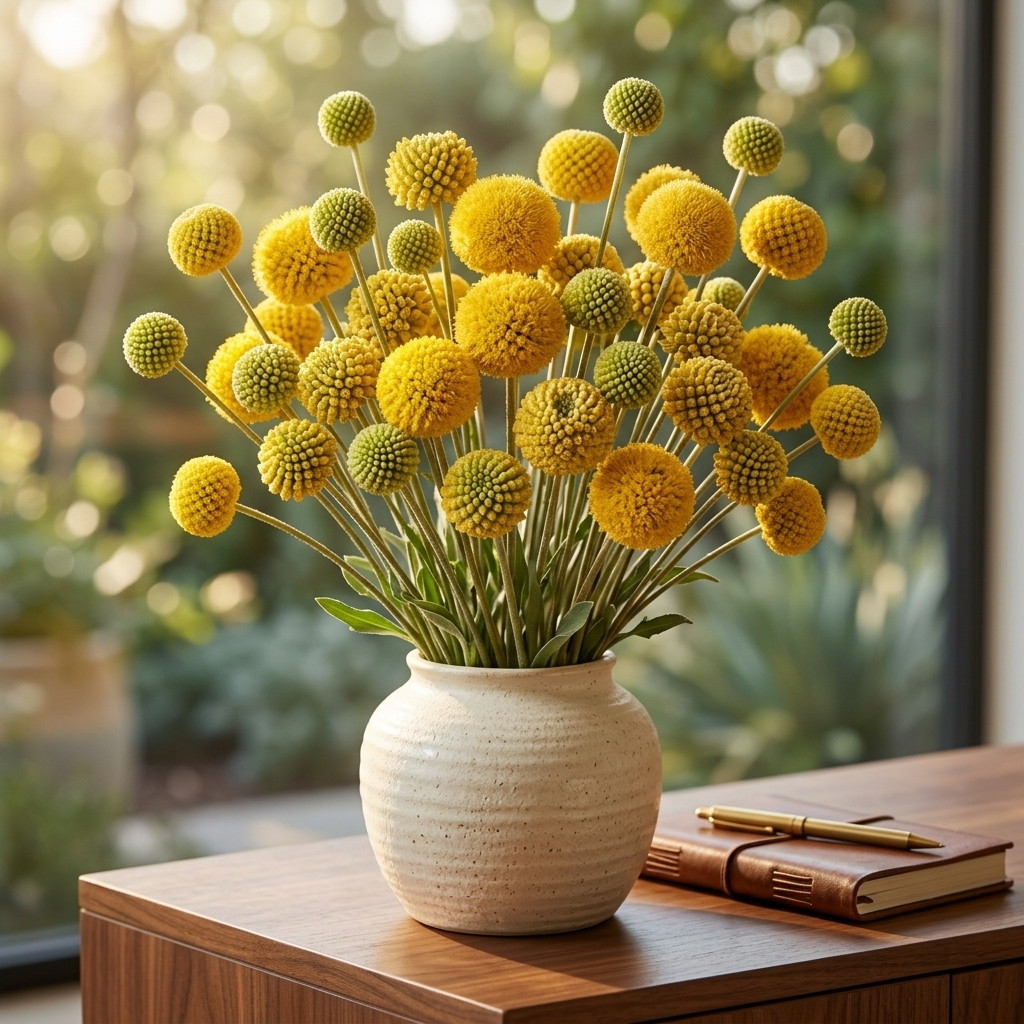
And if the name makes you think of a little ball balanced on the end of a stick, that is actually a very good description of the flower. Craspedia produces almost perfectly round, golden-yellow flower heads held above the foliage on long, straight stems.
It is cheerful, architectural and just a little bit odd - which is exactly why it is so useful in a garden and in a vase.
Drumstick is also one of those flowers that looks modern even though the plant itself is wonderfully simple. A few yellow spheres among grasses, cosmos or blue salvia can completely change the shape of a border.
For us in Hungary, it is best treated as a warm-season annual. It loves sunshine, tolerates heat once established and absolutely prefers soil that drains well.
We'll go from those very small seeds to sturdy seedlings, summer plants, yellow flower heads, fresh bouquets and finally dried stems that can stay in the house long after the garden has gone quiet.
And because Holland Kertészet currently offers Drumstick - 0.08 g from Horti Tops, we'll keep the advice closely connected to the seed you can actually grow with us.
Ready? Let's grow some little yellow planets.
1. Meet the Drumstick
Drumstick is Craspedia, usually sold as Craspedia globosa or simply Craspedia 'Drumstick'. It comes from Australia and New Zealand, where related species grow as perennials, but in our climate we normally enjoy it for one summer.
Those perfect yellow balls
What looks like one flower is actually a dense head made from many tiny yellow flowers packed together. From a distance the result is so neat and round that it almost looks manufactured.
The flower heads are usually around a few centimetres across and sit on slender, upright stems above a low clump of narrow, slightly silvery-green leaves.
A plant made for structure
Craspedia is not a cloud of petals. It is shape. That makes it brilliant beside softer flowers, because the little round heads give the eye something definite to land on.
|
GOOD TO KNOW
|
2. Finding the Right Place
Give it full sun
Drumstick wants sunshine. A bright, open position gives you stronger stems, better flowering and the compact growth we are looking for.
In a Hungarian garden, a south- or west-facing bed can work very well, provided the roots are not sitting in wet soil after storms.
Drainage matters
Craspedia prefers sharply drained soil. Sandy or loamy ground is ideal, and a raised bed can be useful if your garden has heavy clay.
If water stands around the roots for days, choose a different place or improve the drainage before planting. This plant copes far better with a short dry spell than with a permanently soggy root zone.
Do not overfeed
Rich soil is not essential. In fact, very lush growth can give you softer stems. Ordinary, reasonably fertile soil is enough.
|
A COMMON MISTAKE
|
3. The Drumstick We Grow With You
At Holland Kertészet, the current packet is Drumstick. The Horti Tops catalogue lists this Craspedia at around 60 cm tall, which makes it useful both in borders and for cutting.
Why this plant is worth the space
There are plenty of yellow flowers, but very few with this shape. Drumstick gives you a clean round form, long stems and a colour that stays bright even when the flower is dried.
That makes one packet surprisingly versatile. You can grow it for the garden, for fresh arrangements and for winter dried flowers all at once.
Where I would plant it
I would give it a sunny place where the stems can rise between softer plants. Think cosmos, ornamental grasses, verbena, salvia, lavender or pale zinnias.
A small group is usually more effective than one lonely plant. Three, five or more together create that wonderful floating-dot effect.
Which flowers work with it?
Yellow Drumstick looks especially good with blue, purple, white and burgundy. It also works beautifully in warm apricot and terracotta planting if you want something more autumnal.
|
GROW WITH US
|
4. Let’s Sow
Start under protection
Because Craspedia likes warmth, I prefer starting it under protection in late winter or early spring in Hungary. That gives the seedlings time to develop before they move outside after frost danger has eased.
Sow on the surface
The seeds are small. Fill a tray or modules with fine seed compost, moisten it first, then scatter the seed thinly on the surface and press it gently into contact.
Do not bury it deeply. A very light covering is enough. Keep the compost evenly moist while germination begins.
A warm, bright place helps. Once seedlings appear, give them as much light as possible so they stay compact rather than stretching toward the window.
Be patient
Craspedia can be slower than quick annuals such as cosmos or marigolds. Do not keep adding water because nothing has appeared after a few days. Moist is good; saturated is not.
|
DON'T PANIC
|
5. From Seedling to Garden Plant
Pot them on gently
Once the seedlings are large enough to handle, move them into individual cells or small pots if necessary. Hold them by a leaf rather than squeezing the stem.
Harden them off
Indoor-grown seedlings need time to adapt to wind, brighter light and cooler nights. Move them outside gradually over a week or two during mild weather.
Wait for frost
Craspedia is not a plant I would ask to prove itself during an April cold snap. Plant out when the risk of serious frost has passed and the soil is beginning to warm.
Give them room
Space plants so air can move between them and each one can develop a good clump of leaves. Crowding may give you thinner, weaker stems.
|
WHAT I WOULD DO
|
6. Growing Through a Hungarian Summer
Water while it establishes
Young plants need regular moisture while their roots settle in. Check the soil and water deeply when it begins to dry.
Then step back
Once established, Drumstick is reasonably tolerant of dry weather. In the ground it usually needs less attention than a thirsty bedding plant, although containers will still dry quickly in hot Hungarian weather.
Keep the roots breathing
The combination to avoid is heat plus constantly wet soil. Let excess water drain away and never leave pots standing in saucers full of water for days.
Feeding
A modest feed is enough if your soil is poor or your plants are in containers. Do not push for lush foliage. We want firm stems and flowers.
|
GOOD TO KNOW
|
7. When Something Goes Wrong
The seedlings are tall and floppy
They probably need more light. Move them to the brightest suitable place and avoid overwatering. Strong light creates sturdier young plants.
The plant is growing but not flowering
Check sunshine first. Craspedia flowers best in full sun. Too much rich feeding can also encourage leaves at the expense of flower stems.
The leaves are yellowing
Look at the soil. If it is constantly wet, root stress is a likely suspect. If a container is bone dry, the opposite may be true. Always check before watering again.
Slugs and snails
Young plants can be attractive to slugs and snails. Watch newly planted seedlings after wet nights, especially while they are still small.
|
A COMMON MISTAKE
|
8. Flowers for the Garden and the Vase
When the yellow balls appear
The first round buds rise on stiff stems and gradually become that unmistakable bright yellow. Once several are open together, the whole planting suddenly looks playful and graphic.
Cutting fresh stems
Cut when the flower head is fully coloured and firm. Use clean snips and place stems straight into clean water. The stiff stems make them easy to arrange.
Drumstick adds shape without adding visual heaviness. One or two stems can make a soft bouquet feel more interesting, while a whole bunch looks striking on its own.
Keep some outside
Do not cut every stem. Leave a few for pollinating insects and for yourself. The little yellow heads are wonderful to watch against blue summer sky.
|
TRY THIS
|
9. Drying Drumstick
One of the easiest flowers to dry
Craspedia is excellent for dried arrangements because the flower heads keep their shape and much of their colour.
How to do it
Cut good stems when the flower heads are mature and dry. Remove unnecessary leaves, gather a small bunch and hang it upside down somewhere dry, airy and out of direct sun.
Once completely dry, the stems can be used for months. They are lovely in simple bottles, wreaths and mixed dried bouquets.
Saving seed
If you want to experiment, leave a few flower heads to mature fully on the plant. Collect seed only when it is dry, then store it in a labelled paper packet somewhere cool and dry.
|
WHAT I WOULD DO
|
10. Your Drumstick Cheat Sheet
Choose a bright, sunny position.
Start the tiny seed under protection in late winter or spring.
Sow shallowly and keep the compost evenly moist.
Give seedlings strong light so they stay compact.
Harden plants off before moving them permanently outside.
Wait until serious frost risk has passed.
Plant in well-drained soil and avoid waterlogging.
Water young plants while they establish.
Feed lightly rather than heavily.
Cut mature yellow flower heads for fresh or dried arrangements.
If You Remember Only Five Things…
1. Sunshine first
Craspedia wants a bright, open place if you want strong stems and plenty of flowers.
2. Drainage matters
It would rather be a little dry than sit with wet roots for days.
3. Do not bury the seed deeply
Those tiny seeds only need shallow sowing and gentle moisture.
4. Let it mature before cutting
A firm, fully coloured yellow head gives you the best result in a vase or dried arrangement.
5. Dry some
Few flowers make the move from summer garden to winter vase as easily as Drumstick.
One Last Walk Around the Garden
Do you remember where we started? With a packet containing 0.08 grams of seed - hardly enough to look impressive in your hand.
We sowed it shallowly, kept it warm, and waited while those tiny seedlings slowly decided to become proper plants.
Then spring warmed, frost finally loosened its grip, and we moved them outside into the sun.
At first there was only a small tuft of narrow leaves. Nothing particularly dramatic.
One by one, little yellow spheres appeared above the foliage until the bed looked as though someone had placed tiny suns on sticks throughout the garden.
We cut some for the house. We left some outside. And because we were sensible gardeners, we probably cut a few more than we intended.
Later, we hung a handful upside down to dry, and suddenly the flower that began in a spring seed tray was still with us in winter.
That is the charm of Craspedia. It is simple to look at, but it gives you something very few other flowers can: colour, shape and a second life after summer.
Next year you may grow more. Perhaps a whole row in the cutting garden. Perhaps just five plants woven through grasses and lavender.
Either way, you now know exactly what those tiny seeds are capable of becoming.
When you're ready for the next plant…