
From Tiny Seeds to a Garden Painted in Leaves
A friendly guide to sowing, shaping and enjoying coleus in Hungary.
Come Into the Garden With Me…
Today, we're growing coleus.
And this time, the flowers are not the reason we're here. In fact, when coleus decides to flower, many gardeners simply snip the flower spikes off and carry on admiring the leaves.
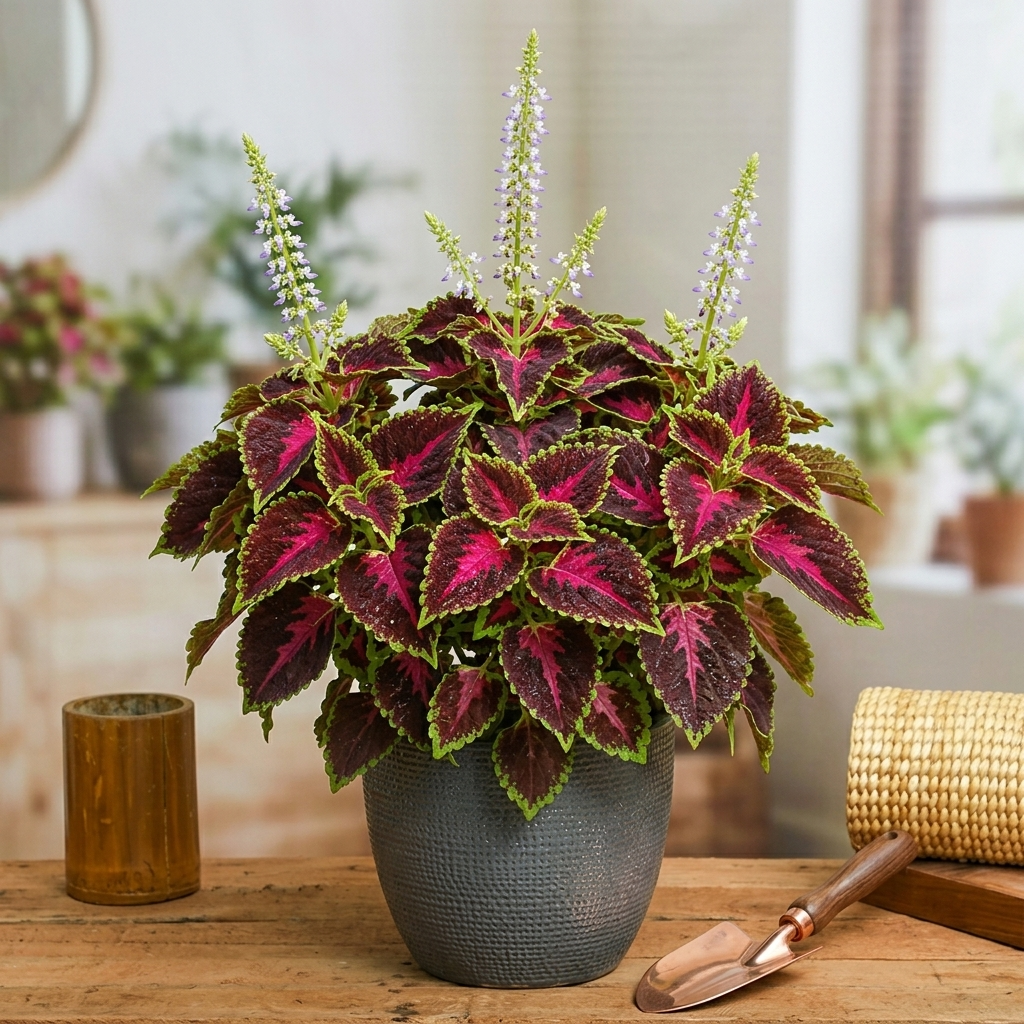
Because the leaves are the show: lime green, burgundy, pink, bronze, red, cream and purple, often splashed, edged or marbled together on the same plant.
Coleus is one of the easiest ways to bring colour into a place where flowering plants may struggle, especially a bright balcony, a sheltered terrace or a garden bed with some afternoon shade.
For us in Hungary, it is a warm-season plant. It loves warmth but not frost, and many seed-grown types appreciate protection from the fiercest midday sun during our hottest summer weeks.
We'll start with those tiny seeds, raise the seedlings, learn how much light gives the best colour, pinch the plants into bushy shapes, keep them watered through summer and even save a favourite plant before winter.
By the end, you'll know why coleus can become slightly addictive. One colour is rarely enough.
Come on. Let's grow a garden where the leaves do the flowering.
1. Meet Coleus
Coleus is usually sold under that familiar old name, although botanically the garden plant is now called Plectranthus scutellarioides. You may also see older labels such as Coleus blumei. Don't let the name changes worry you. Gardeners still happily call it coleus.
A plant grown for leaves
Most garden plants ask us to wait for flowers before the colour arrives. Coleus starts much earlier. Once the true leaves develop, the pattern begins appearing, and every new leaf adds more colour.
Seed-grown mixtures are especially fun because neighbouring seedlings can look completely different. One may be lime and burgundy, another pink and green, another almost chocolate coloured.
Annual or perennial?
Coleus is a tender perennial in warm climates, but Hungarian winter frost will kill it outdoors. For most of us, it is simplest to grow it as a summer annual. If you fall in love with one particular plant, however, you can try overwintering it indoors or take cuttings before autumn cold arrives.
|
GOOD TO KNOW Coleus is one of the few plants in this series where the leaves are the main event. The small flower spikes are optional; removing them often keeps the plant compact and focused on foliage. |
2. Finding the Right Light
Bright, but not baked
Coleus needs good light for strong colour, but the perfect amount depends on the variety. Many seed-grown coleus are happiest with morning sun and some protection from the fiercest afternoon heat.
In Hungary, a balcony receiving gentle eastern sun can be excellent. A west-facing terrace that becomes an oven at four o'clock in July may be much harder unless the plants receive shade and reliable water.
Too much shade
Deep shade can make colours duller and stems stretch toward the light. If a plant becomes long, pale and loose, it may be asking for a brighter position.
Too much sun
Scorched, bleached or crispy patches can mean the plant is receiving more direct heat than it can comfortably handle, especially after being moved suddenly from indoors into strong sun.
|
A COMMON MISTAKE Assuming every coleus wants deep shade. It doesn't. Think bright light with sensible protection from extreme midday heat, then let the leaves tell you whether the position is working. |
3. The Coleus We Grow With You
In the current Holland Kertészet range, you'll find Coleus 'Rainbow'.
The packet recommends sowing from March to July at around 20°C. Once the seedlings reach roughly 5-8 cm, they can be moved on or planted out when outdoor temperatures are suitable.
Why Rainbow is fun
Rainbow is a mixture, so the seedlings don't all look alike. That means the tray becomes a little colour lottery. You may find red-centred leaves, green edges, copper shades, pink splashes and combinations you weren't expecting.
A compact summer plant
The packet gives an eventual height of around 35 cm, making it particularly useful in pots, balcony boxes, at the front of borders and beside taller summer flowers.
Pruning is encouraged
The Holland Kertészet listing also recommends pruning when growth becomes too fast. That's excellent advice: pinching and trimming are exactly how we turn one upright stem into a rounded, bushy plant.
|
GROW WITH US Coleus 'Rainbow' is perfect for experimenting. Grow several seedlings, keep the colours you love most, and use them to brighten the partly shaded places where flower colour is harder to achieve. |
4. Let's Sow
Start with warmth
Fill a clean seed tray or modules with fine seed compost and moisten it before sowing. Coleus seed is small, so sow thinly and avoid burying it deeply. A very light covering is enough, and good contact with the moist compost matters more than depth.
Keep the tray around 20°C as the packet suggests. Consistent warmth and gentle moisture are your friends here.
Give seedlings light quickly
Once green shoots appear, move them into very good light. A warm windowsill with poor light can produce long, weak seedlings surprisingly quickly.
Keep the compost evenly moist, but not permanently soaked. Tiny roots need both moisture and air.
When the colours appear
The first seed leaves are not the finished product. Wait for true leaves. That's when the little patterns begin showing and the tray becomes much more interesting.
|
DON’T PANIC Your first seedlings may all look rather green. Give them time. The characteristic colour and pattern become clearer as true leaves develop and the plants receive good light. |
5. From Seedling to Bushy Plant
Potting on
When seedlings are sturdy enough to handle, move them carefully into individual small pots or larger modules. Hold them by a leaf rather than squeezing the stem.
The Holland Kertészet packet suggests moving plants on once they are around 5-8 cm high. That's a useful moment to give each seedling its own space.
Pinch early
When a young coleus has several pairs of leaves, pinch out the soft growing tip. Two side shoots usually respond below the pinch, giving you a fuller plant instead of one tall stem.
Later, you can pinch those shoots again if you want an even rounder shape. Don't be afraid of this. Coleus responds beautifully to gentle pruning.
Hardening off
Before permanent outdoor planting, gradually introduce indoor-raised plants to wind, stronger light and cooler nights. Wait until frost danger has passed; coleus is a warm-weather guest, not a Hungarian spring hero.
|
WHAT I WOULD DO Grow more seedlings than you think you need. Once the colours develop, choose your favourites for the most visible pots and use the others to fill gaps in the border. |
6. Summer Care in Hungary
Watering matters
Coleus has soft foliage and does not enjoy becoming bone dry. Plants in containers may need frequent watering during hot Hungarian weather, especially on balconies where pots heat up quickly.
Check the compost with your finger. Water thoroughly when it is beginning to dry, then let excess water escape. Constantly soggy roots are no better than drought.
Feeding
Container-grown plants can benefit from a light, regular feed during active growth. Avoid pushing them too hard with nitrogen, though. We want compact colourful plants, not enormous soft stems.
Keep pinching
If one shoot races ahead of the others, shorten it. If the whole plant becomes loose, give it a light trim. Coleus is wonderfully forgiving, and every trim can encourage fresh colourful leaves.
Flowers or no flowers?
Small flower spikes may appear later in summer. You can leave them, especially if you enjoy their delicate look, or remove them to keep the plant focused on foliage and a compact shape.
|
GOOD TO KNOW A little midday droop during extreme heat does not always mean disaster. Check the soil first. If it is moist, the plant may simply be protecting itself from heat rather than asking for another litre of water. |
7. When Something Goes Wrong
The colours look dull
Light is the first thing to investigate. Too little light can reduce colour intensity; extreme sun can bleach or scorch leaves. Move gradually rather than making a dramatic change in one day.
Long, floppy stems
Usually the plant needs more light, more pinching, or both. Cut lanky stems back to just above a pair of leaves and let new side shoots rebuild the shape.
Brown crispy edges
Hot sun, dry compost, hot wind or a combination of all three can damage soft leaves. Check moisture and consider afternoon shade if the plant is exposed to intense heat.
Yellow leaves and wet compost
Coleus likes moisture, but it still needs drainage. If the pot stays wet for days, roots can struggle. Make sure containers have drainage holes and empty decorative outer pots if water collects inside them.
Pests
Aphids, whitefly and spider mites can sometimes appear, especially on stressed plants or those overwintered indoors. Inspect the undersides of leaves regularly and deal with small problems early.
|
A COMMON MISTAKE Watering wilted coleus automatically. Always touch the soil first. A dry plant needs water; a plant wilting in saturated compost needs better root conditions, not another drink. |
8. Designing With Leaves
Colour without waiting for flowers
Coleus can hold a colour scheme together from early summer until frost. Burgundy leaves echo red flowers, lime leaves brighten dark corners, and pink-variegated plants can connect several different flower colours in one container.
In pots and balcony boxes
Use one dramatic coleus as the centre of a mixed pot, or fill a container entirely with different Rainbow seedlings. Add trailing plants around the edge and you have a summer display that looks colourful even between flower flushes.
In the border
Repeat small groups rather than scattering single plants everywhere. A patch of three or five plants gives enough leaf colour to be noticed from a distance.
What to combine it with
Busy Lizzie, begonias and other shade-tolerant annuals make natural partners. In brighter positions, coleus can also sit beside marigolds, salvias or ornamental grasses, provided the light and watering suit them all.
|
TRY THIS Choose one dark coleus, one lime-green plant and one pink-toned seedling from your Rainbow tray. Put them together in a large pot. The contrast can look as deliberate as a professionally designed container. |
9. Autumn, Cuttings and Winter
Coleus will continue looking good until nights become genuinely cold. Then Hungary reminds us that this tropical-looking plant is not built for frost.
Treat it as an annual
The simplest option is to enjoy it until frost, then compost healthy plants and sow fresh seed next spring.
Or save a favourite
If one Rainbow seedling has a colour you absolutely love, bring it indoors before frost or take a few soft cuttings in late summer. Coleus roots readily from healthy stem cuttings in suitable conditions.
Keep overwintered plants bright, frost-free and less wet than they were outdoors in summer. Indoor growth may become a little leggy during low winter light; trim it and start fresh growth when spring returns.
Why cuttings are useful
Seed from a mixture may not reproduce the exact same leaf pattern next year. A cutting is a clone, so it is the easiest way to keep one particular favourite colour combination.
|
WHAT I WOULD DO Take two cuttings from your favourite plant before autumn. Keep one and give one away. If one fails, you still have a backup - and somebody else gets a very colourful windowsill. |
10. Your Coleus Cheat Sheet
Choose Holland Kertészet Coleus 'Rainbow'.
Sow from March to July at around 20°C.
Sow the small seed shallowly and keep the compost gently moist.
Give seedlings excellent light once they emerge.
Pot seedlings on when they are sturdy and around 5-8 cm tall.
Pinch growing tips to create compact, bushy plants.
Plant outside only after frost danger has passed.
Use bright light or morning sun with protection from extreme afternoon heat where needed.
Water containers regularly, but always provide drainage.
Before autumn frost, take cuttings from any plant whose leaf pattern you want to keep exactly.
If You Remember Only Five Things…
1. Grow it for the leaves
The foliage is the flower show, so choose positions and combinations that let those colours shine.
2. Bright light gives better colour
But many seed-grown plants appreciate protection from brutal Hungarian midday heat.
3. Pinching is your friend
A small trim turns a tall stem into a full, bushy plant.
4. Don’t let pots dry completely
Coleus likes steady moisture during hot weather, especially in containers.
5. Save favourites with cuttings
A cutting keeps the exact leaf colour and pattern that made you fall for that particular plant.
One Last Walk Around the Garden
Do you remember where we started? With a packet of seeds for a plant that wasn't really asking us to wait for flowers at all.
We sowed them warm. We watched the first true leaves unfold. Then the surprises began: lime green, burgundy, pink, copper, cream and all sorts of combinations in between.
We learned that coleus colour is a conversation between the plant and the light. Too dark and it can fade. Too fierce and the leaves can scorch. Somewhere in between is that perfect position where the colours glow.
We pinched the growing tips, watched side shoots appear, and discovered that pruning a beautiful plant doesn't ruin it. Quite the opposite. It makes more of what we love.
And perhaps by August, one plant became your favourite. The one with the strange pink edge. Or the almost-black centre. Or the lime leaves that seemed to light up a shady corner.
That's the plant I want you to take a cutting from before autumn.
Because while frost may end the outdoor season, it doesn't necessarily have to end that particular coleus.
Bring a little piece of it inside. Keep it through winter if you can. And when spring returns, you may already have the beginning of next summer's colour waiting on the windowsill.
Sometimes a garden is about flowers. Sometimes it's about fruit. And sometimes a handful of brilliantly painted leaves is more than enough.
And when you're ready for another plant…