
Zinnia elegans & garden hybrids
From One Seed to Armfuls of Summer Colour
A friendly guide to sowing, growing, cutting and enjoying zinnias in Hungary.
Come Into the Garden With Me…
Today, we're growing zinnias - the kind of flower that rewards a beginner almost immediately. The seeds are large enough to handle, the seedlings grow quickly once the soil is warm, and the flowers arrive in such a cheerful range of colours that one packet can turn an ordinary patch of ground into a little cutting garden.
Zinnias are especially well suited to a Hungarian summer. They want heat, sunshine and good drainage, and once established they cope far better with July and August than many cool-season flowers. Their weak point is damp, crowded foliage, so the secret is not complicated: give them room, water at the base and keep cutting flowers.
This book follows the same practical rhythm we use in the Holland Kertészet zinnia guide: sow into warm soil after frost, succession sow for a longer season, give plants good airflow, cut regularly and watch for powdery mildew.
Ready? Find the sunniest place in the garden and a clean pair of scissors. We're going to grow a flower that gets better the more you cut it.
|
GOOD TO KNOW |
1. Meet the Zinnia
Most garden zinnias are forms of Zinnia elegans or closely related hybrids. They belong to the daisy family, Asteraceae, and originate from Mexico and nearby parts of the Americas. What gardeners love is the extraordinary range: single flowers, doubles, cactus-flowered forms, pompons, giant cutting types and compact patio plants.
One flower, many personalities
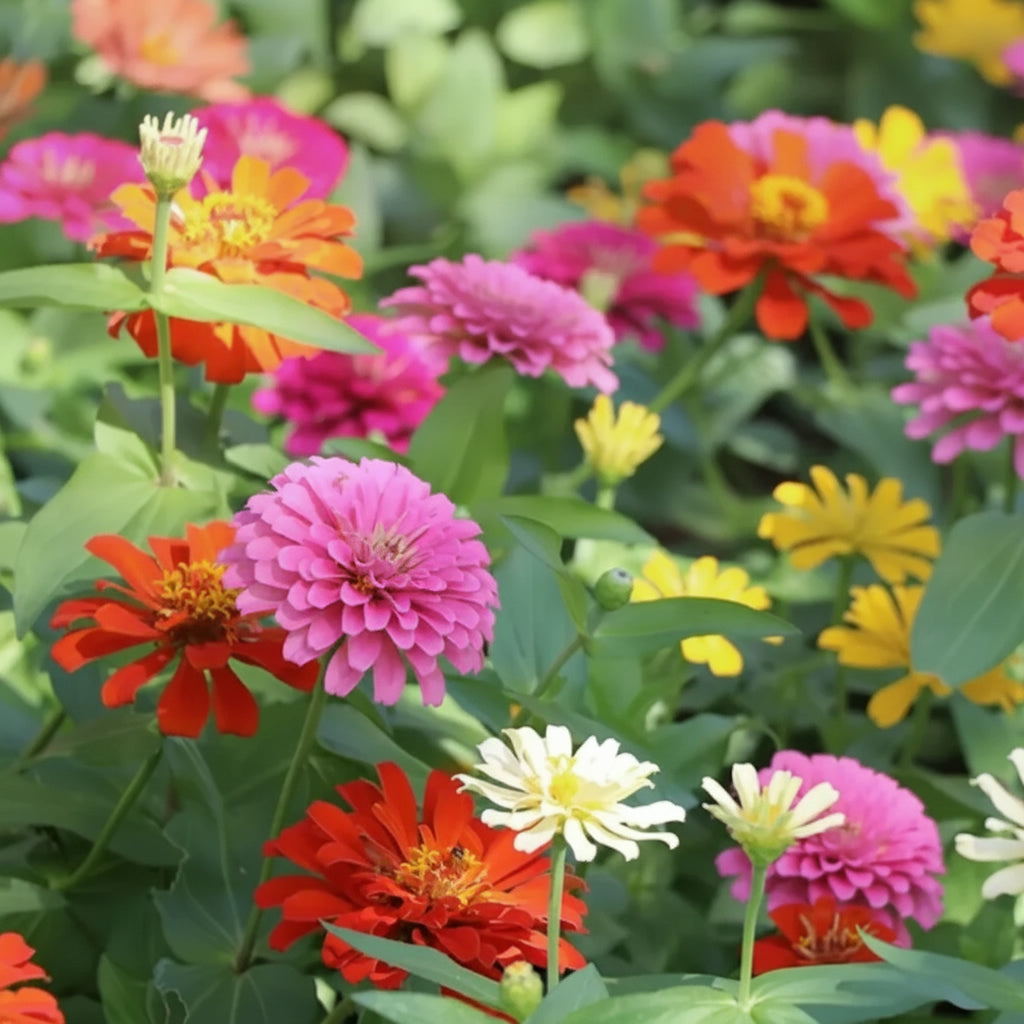
A zinnia can be neat and button-like or broad and dramatic. Colours run through white, cream, yellow, orange, coral, salmon, pink, red, purple, lime green and almost every warm combination in between. Some varieties are grown mainly for cutting; others stay compact enough for pots and edging.
Why butterflies notice them
Single and semi-double zinnias offer an easy landing platform and accessible nectar and pollen. Butterflies often sit flat on the flower head while feeding, which makes a flowering zinnia patch one of the nicest places in the garden to stop and watch for a few minutes.
|
A SIMPLE RULE |
2. Choosing the Zinnia You Want
Holland Kertészet carries zinnia seed for different jobs in the garden, and the most useful way to choose is by habit rather than by colour alone.
Tall cutting zinnias
These are the bouquet makers. They usually grow roughly 80-130 cm tall, depending on variety, and reward frequent cutting with more branching stems. Give them full sun, generous spacing and support if your garden is exposed to summer storms.
Compact border and patio zinnias
Compact forms are better for pots, edging and smaller gardens. They flower lower down, are easier to manage in wind and can make a colourful container without the staking needed by tall cutting varieties.
Disease-resistant modern types
Some modern zinnia series, including Zahara-type hybrids, are selected for better tolerance of leaf spot and mildew. That can be useful in gardens where airflow is limited or summers become humid after thunderstorms.
|
WHICH ONE SHOULD I CHOOSE? |
3. The Right Place
Zinnias want sun. Aim for at least six hours of direct light, and more is welcome. In shade the plants stretch, stems become softer and flowering is reduced.
Warm soil matters
A zinnia seed does not gain anything from sitting in cold, wet spring soil. Wait until frost danger has passed and the ground has warmed. In much of Hungary, direct sowing becomes reliable from late April into May, depending on the year and your exact garden.
Drainage and airflow
The soil can be ordinary garden soil enriched with some compost, but it must drain. More important than luxury is air movement around the foliage. Crowded zinnias stay damp after rain and are far more likely to develop powdery mildew or leaf spotting.
|
HUNGARIAN GARDEN NOTE |
4. Let's Sow
Zinnias are wonderfully straightforward from seed. They germinate quickly when warm and do not need months of indoor nursing.
Direct sowing outdoors
Once the soil is warm, sow about 5-6 mm deep. Water gently and keep the seedbed evenly moist until seedlings appear. When the young plants have several true leaves, thin them so they have enough space for airflow and branching.
Starting indoors
If you want an earlier start, sow about four to six weeks before your expected last frost. Use individual modules or small pots because zinnias dislike repeated root disturbance. Give the seedlings strong light as soon as they emerge and harden them off before planting outside.
Succession sowing
Instead of sowing every seed on one day, sow a small batch every 10-14 days through late spring. The first group will begin flowering while the later groups are still growing, giving you a much longer supply of fresh stems.
|
THE BEGINNER WIN |
5. From Seedling to Flowering Plant
Young zinnias grow quickly once nights are mild. If you started them indoors, plant them out after hardening off and after real frost danger has passed.
Spacing
Spacing depends on the variety. Compact plants may be happy around 15-20 cm apart, while large cutting zinnias often benefit from 30-40 cm or more. Read the packet, but always remember that airflow is part of disease prevention.
Pinching for more stems
For tall cutting types, pinch out the growing tip when the plant has around three or four pairs of true leaves. You sacrifice the first central flower, but the plant branches lower down and usually gives you many more usable stems later.
|
CUT-FLOWER TRICK |
6. Watering and Feeding Through a Hungarian Summer
Water deeply at the base
During prolonged heat, give zinnias a thorough drink rather than frequent little splashes. Water the soil, not the leaves. Drip irrigation, a soaker hose or a watering can directed at the base keeps foliage drier and reduces disease risk.
Do not overfeed
Zinnias appreciate reasonably fertile soil, but too much nitrogen creates lush green growth at the expense of flowers. Compost at planting and a light balanced feed during active growth are usually enough.
Mulch, but leave the stem breathing
A light mulch helps hold moisture during Hungary's long dry spells. Keep it slightly away from the base of the stem so the crown stays airy rather than permanently damp.
|
HOT-WEATHER NOTE |
7. Cut More, Get More
Zinnias are among the best beginner cut flowers because harvesting encourages the plant to branch and produce more blooms. Leaving every flower to age on the plant pushes energy toward seed instead.
The wiggle test
Before cutting, hold the stem a short distance below the flower and gently wiggle it. If the flower head flops on a soft stem, wait. If the stem feels stiff and the head stays steady, the flower is mature enough for the vase.
Where to cut
Cut above a strong leaf node or branching point and place stems immediately into clean water. Remove any leaves that would sit below the waterline. Zinnias do not continue opening much after cutting, so choose flowers that are already well developed.
Keep picking
During peak summer, walk through the patch every few days. Cut fresh flowers and deadhead anything you do not want for seed. A regularly harvested zinnia bed can stay productive until autumn frost.
|
ONE OF MY FAVOURITE RULES |
8. Powdery Mildew and Other Problems
White powder on the leaves
Powdery mildew is the classic zinnia problem. Improve spacing, water at the base, remove badly affected material and avoid creating a humid thicket. It often appears late in the season; good cultural care can delay it considerably.
Leaf spots
Bacterial and fungal leaf spots are also encouraged by wet foliage and poor airflow. Do not repeatedly splash soil onto lower leaves, and remove infected debris rather than leaving it beneath the plants.
Aphids, mites and whiteflies
These can appear during stressful weather. Start with plant health: steady moisture, sunlight and airflow. Small aphid colonies can often be washed away, while severe recurring problems may need a targeted treatment appropriate for ornamental plants.
Stems flopping
Tall cutting varieties may need support in exposed gardens. A simple horizontal net, discreet stakes or twine between posts can keep a whole row upright without making the bed look like a forest of sticks.
|
A COMMON MISTAKE |
9. Zinnias in Pots and Small Gardens
You do not need a large cutting patch to enjoy zinnias. Compact varieties are excellent in containers, and even taller forms can grow in large pots if they have enough root room and regular watering.
Container rules
Use a pot with drainage holes, good-quality potting mix and a sunny position. Containers dry much faster than garden soil, so check them frequently in July and August. Do not leave a saucer permanently full of water.
A simple balcony combination
Try compact zinnias with trailing lobelia or alyssum around the edge of a large pot. The zinnias give the height and bold flowers while the smaller plants soften the rim.
10. Saving Seed
Toward the end of the season, stop deadheading a few healthy flowers and let the heads dry fully on the plant. When they are brown and crisp, collect them on a dry day and separate the seeds from the flower remains.
Store dry seed in a labelled paper envelope somewhere cool and dry. If your zinnias were open-pollinated varieties, next year's seedlings may resemble the parents but can still vary. Seed saved from F1 hybrids may produce much more variation in the next generation.
|
LEAVE A FEW FOR LATER |
11. A Simple Zinnia Calendar for Hungary
FEBRUARY-MARCH Choose varieties and prepare trays if you want an early indoor start.
APRIL Start small indoor batches. Toward the end of the month, watch soil temperatures and frost forecasts.
MAY Main outdoor sowing and planting month once frost danger has passed. Begin succession sowing.
JUNE Continue succession sowing early in the month. Pinch tall cutting types and keep young plants growing strongly.
JULY Peak growth and first heavy flowering. Water deeply, cut regularly and watch for mildew.
AUGUST Keep harvesting. Maintain airflow and remove diseased leaves promptly.
SEPTEMBER Enjoy late flowers. Begin leaving selected heads for seed.
OCTOBER Collect dry seed before prolonged wet weather and remove plants after frost.
NOVEMBER-JANUARY Store seed dry, plan next year and remember which colours and forms you loved most.
12. Your Zinnia Cheat Sheet
• Plant type: frost-tender annual.
• Best position: full sun.
• Soil: fertile to ordinary, always well drained.
• Sow indoors: about 4-6 weeks before the last frost if desired.
• Direct sow: after frost when soil is warm.
• Sowing depth: about 5-6 mm.
• Spacing: roughly 15-40 cm depending on variety.
• Watering: deeply at soil level; avoid routinely wetting leaves.
• Pinching: useful for tall cutting types.
• Flowering: midsummer to first autumn frost.
• Best habit: cut or deadhead regularly for more blooms.
• Main disease concern: powdery mildew and leaf spots.
• Best uses: borders, cutting gardens, pollinator beds and containers.
|
IF YOU REMEMBER ONLY FIVE THINGS |
One Last Walk Around the Garden
We began with a flat little seed and a warm patch of soil. A few days later came two strong seed leaves. Then a sturdy stem, pairs of rough green leaves and, almost before we noticed, the first tightly folded flower bud.
That first flower is satisfying. The tenth is exciting. By the time you are carrying an armful into the kitchen and still seeing dozens of buds outside, you understand why so many gardeners become devoted to zinnias.
They ask for warmth, sunshine, airflow and a little water. In return they give colour through the hottest part of the Hungarian summer, food for butterflies and bees, and flowers generous enough to cut without guilt.
Until then, enjoy your flowers. And whenever you're ready to grow something new…
Come into the garden with me.