
From Tiny Seeds to Vanilla-Scented Summer Flowers
A friendly guide to sowing, growing and enjoying heliotrope in Hungary.
Come Into the Garden With Me…
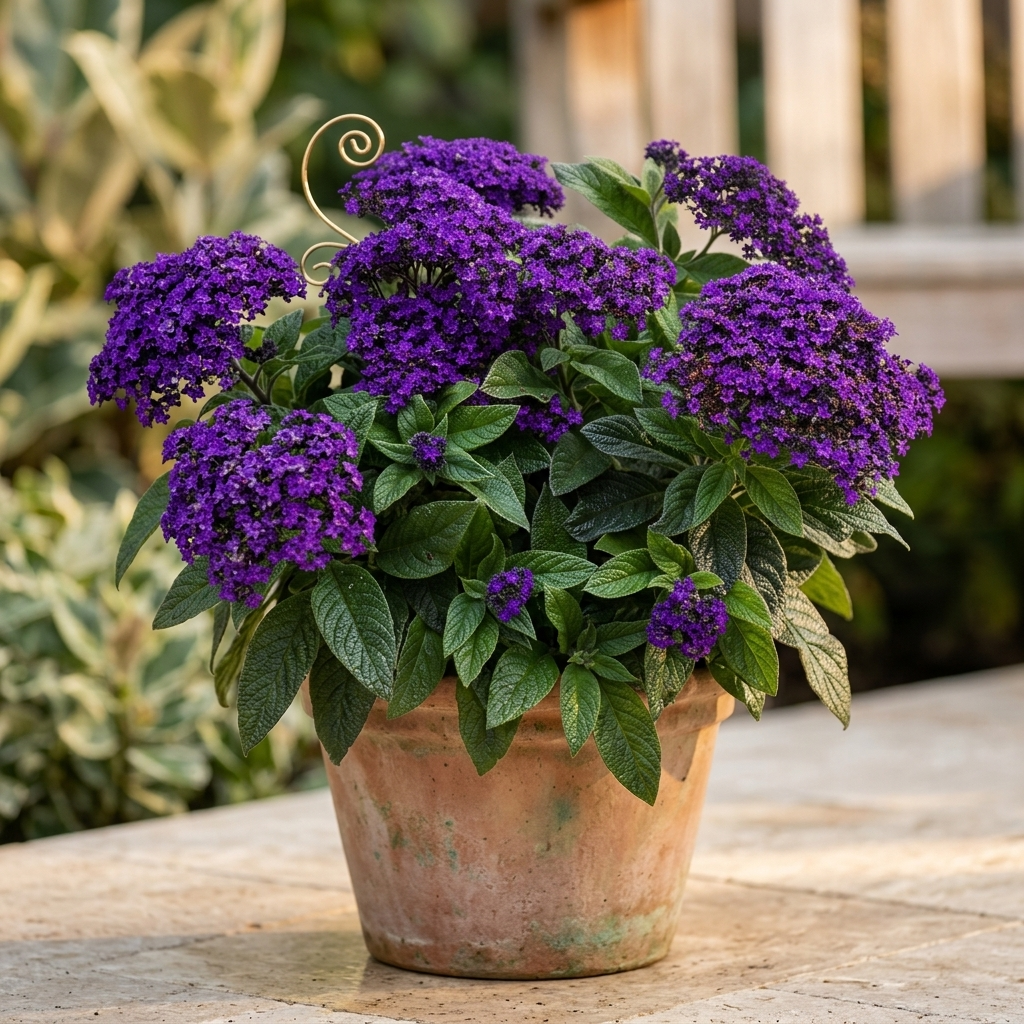
Today, we're growing heliotrope - a flower that often reaches you first through its scent. Walk past a happy plant on a warm afternoon and you may catch something sweet in the air: vanilla, honey, sometimes even a little cherry-pie note.
Then you look down and see the deep blue-purple flower clusters sitting above dark green leaves, and suddenly the fragrance has a face.
At Holland Kertészet, our variety is Heliotrope 'Marine Blue'. The packet describes a compact annual about 40 cm tall, sown from February to mid-April at around 20°C, or under glass in April and May, then planted outside in early May once conditions are safe.
This is a warm-season plant. It loves sun, warmth, balcony boxes and flower pots, and it rewards regular feeding with a long summer display.
1. Meet Heliotrope
Heliotrope belongs to the genus Heliotropium. Our Marine Blue is the familiar garden heliotrope, Heliotropium arborescens, usually grown as a summer bedding plant in Hungary even though it can behave as a tender perennial in frost-free climates.
The flowers are made up of many tiny blooms packed into rounded clusters. From a distance, they look almost like little purple-blue cushions. Up close, each tiny flower contributes to that famous sweet scent.
The leaves are dark green, slightly textured and substantial enough to make the plant attractive even before flowering begins.
|
GOOD TO KNOW |
2. Finding the Right Place
Heliotrope wants warmth, but it also wants us to pay attention to moisture. Think sunny and sheltered, with roots that are neither dry for days nor sitting in water.
Sun and Hungarian heat
The Holland Kertészet packet specifically recommends a sunny, warm position and even calls out south-facing gardens, balcony boxes and pots. In spring and early summer, that is excellent advice.
During extreme midsummer heat, especially in a small container on a south-facing Budapest balcony, the rootball can dry very quickly. The plant loves warmth, but a pot that becomes completely dry every afternoon will not give its best flowering.
Soil
Use fertile, moist but well-drained soil. In the ground, compost worked into ordinary garden soil is usually enough. In containers, use a good-quality potting mix with drainage holes that actually allow excess water to escape.
Shelter helps
A position protected from strong wind keeps the foliage looking better and reduces how quickly containers dry. A sunny courtyard, terrace or sheltered border is ideal.
|
A COMMON MISTAKE |
3. The Heliotrope We Grow With You
Marine Blue gives us the classic heliotrope look: dark green foliage, compact growth around 40 cm, and richly coloured blue-purple flower clusters with a sweet vanilla-like fragrance.
Because it stays relatively compact, it works beautifully at the front of a border, in a large pot by itself, or mixed into a balcony box where you can enjoy the scent at close range.
4. Let's Sow Marine Blue
When to start
For a long flowering season, begin early. The Holland Kertészet packet recommends sowing in a seed tray from February to mid-April at around 20°C. That gives the seedlings time to become sturdy before outdoor planting.
A second option is sowing under glass in April and May. Later sowing is still possible, but naturally the flowers will arrive later too.
How to sow
Fill a clean tray or small pots with fine seed compost and moisten it before sowing. Scatter the seed thinly and press it gently into contact with the compost. A very light covering is enough.
Keep the compost evenly moist and warm. Heliotrope usually germinates more reliably with steady warmth than with the temperature swings of an unheated windowsill in early spring.
After germination
Once seedlings appear, give them very good light. Warmth without enough light creates long, weak seedlings. We want compact plants with short internodes and strong stems.
When they are large enough to handle, move seedlings into small individual pots. Hold them by a leaf, not by squeezing the delicate stem.
|
DON'T PANIC |
5. From Seedling to Garden Plant
Pinch for a bushier plant
When the young plant has several sets of leaves and is growing strongly, pinch out the soft growing tip. This encourages side shoots and helps create the rounded, bushy plant we want rather than one long stem with flowers at the top.
If you dislike pinching healthy growth, remember what we are doing: one small tip now can mean several flowering shoots later.
Hardening off
Before planting outside, gradually introduce the plants to outdoor conditions. Start with a few sheltered hours during mild weather, then extend the time over a week or two.
Heliotrope is frost tender. A few lovely April afternoons do not mean Hungarian nights are finished being cold. If frost is still possible, keep the plants protected.
Planting out
The packet suggests planting out from early May, but use the weather rather than the calendar alone. In colder parts of Hungary or in a late spring, waiting until frost danger has genuinely passed is wiser than rushing.
Plant into fertile, well-drained soil and water thoroughly. For containers, choose a pot large enough that the rootball will not dry in a few hours once July heat arrives.
|
WHAT I WOULD DO |
6. Summer Care: Flowers and Fragrance
Watering
Check the soil regularly. Water deeply when the upper layer begins to dry, then allow excess water to drain. In the ground, established plants need less frequent attention; in containers, hot weather may mean checking every day.
Feeding
Marine Blue responds well to regular feeding, and Holland Kertészet specifically recommends it. In containers, use a balanced or flowering-plant fertiliser according to the label. In garden soil, moderate feeding is enough.
More fertiliser is not automatically better. Very lush, soft growth can be less attractive and more vulnerable to pests.
Deadheading
Remove spent flower clusters once they become tired. This keeps the plant neat and encourages energy to go into new growth and more flowers instead of seed.
Pinching again?
If a plant becomes uneven or leggy, a light trim can encourage fresh branching. Do not remove everything at once during peak flowering; shape it gently.
The scent can change
Fragrance often seems strongest on warm, still days and can be easier to notice in the evening. Different noses also describe heliotrope differently - vanilla to one person, honey or cherry pie to another.
|
TRY THIS |
7. When Something Goes Wrong
Yellow leaves
First check the watering. Persistently wet compost can stress the roots, while repeated drying can also cause yellowing. Look at the whole root zone before reaching for fertiliser.
Very few flowers
Not enough light is a common reason. Too much nitrogen can also give you a beautiful green plant that forgets why we invited it into the garden. Move it into better light if possible and feed sensibly.
Wilting in hot weather
A container may simply be dry. Check below the surface and water thoroughly if needed. If the soil is already wet, do not add more water automatically - poor drainage can also cause wilting roots.
Whitefly and aphids
Heliotrope, especially under glass or during overwintering, can attract whitefly. Aphids may also gather on tender new growth. Check leaf undersides and shoot tips early, before a small problem becomes a large one.
Leggy growth
Usually this means not enough light or not enough pinching. Give better light and trim soft tips to encourage branching.
Is it safe?
Heliotrope is an ornamental plant, not an edible flower. RHS notes that repeated eating can be harmful to pets, so place it thoughtfully if you have animals that habitually chew garden plants.
|
DON'T PANIC |
8. Flowers, Pollinators and the Best Seat in the Garden
Once Marine Blue settles into summer, the reward is wonderfully generous: cluster after cluster of dark blue-purple flowers sitting above handsome green leaves.
For people
Heliotrope is one of those plants that improves a place rather than merely filling it. Put it near the front door and the scent becomes part of coming home. Put it beside the terrace and summer evenings become more fragrant.
For pollinators
The small flowers can attract bees and butterflies, so leave plenty of clusters outside rather than treating heliotrope only as a decorative pot plant.
Can I cut it for a vase?
You can cut flowering stems, but heliotrope is generally more valuable as a living scented plant than as a long-stemmed cut flower. If you do cut some, choose stems with fresh clusters and place them in clean water immediately.
Colour combinations
Marine Blue looks beautiful with white alyssum, pale pink pelargoniums, salmon godetia, soft yellow cosmos or silver foliage. In a pot, let the dark flowers be the focal point and use lighter companions around them.
|
GROW WITH US |
9. When Autumn Arrives
Heliotrope keeps flowering while the weather stays warm, but Hungarian autumn eventually changes the rules. Nights cool, growth slows and the first frost will usually finish plants left outside.
Treat it as an annual
The simplest option is to enjoy it for one season, then remove the plant after frost. This is why the Holland Kertészet packet lists Marine Blue as an annual.
Or try overwintering one
Botanically, Heliotropium arborescens is a tender perennial. If you have a favourite plant in a pot, you can experiment by moving it indoors before frost to a bright, cool, frost-free place.
Reduce watering considerably in winter. Keep the rootball only lightly moist, not wet, and expect growth to slow. In spring, trim leggy stems, begin watering more regularly and gradually return the plant to stronger light.
Take cuttings
Another way to keep a favourite plant is to take soft tip cuttings before autumn. Small rooted cuttings take less indoor space than one large old plant and can give you fresh plants for next season.
Will saved seed be identical?
Seed may give variation, especially if your plant has been growing near other heliotropes. If you want the exact same plant, cuttings are more reliable than saved seed.
|
GOOD TO KNOW |
Your Heliotrope Cheat Sheet
• Holland Kertészet offers Heliotrope 'Marine Blue'.
• Sow from February to mid-April in a warm seed tray at around 20°C.
• You can also sow under glass in April-May.
• Give seedlings strong light and pot them on when they are easy to handle.
• Pinch young plants to encourage bushy growth and more flowering shoots.
• Harden off carefully and plant outside only when frost danger has passed.
• Expect a compact plant around 40 cm tall.
• Choose sun, warmth and a sheltered position with moist but well-drained soil.
• Water containers regularly during hot Hungarian weather.
• Feed regularly, especially in pots, but do not overdo nitrogen.
• Deadhead tired flower clusters to keep the plant flowering.
• Watch for whitefly and aphids, especially under glass.
• Treat it as an annual outdoors, or experiment with frost-free overwintering.
If You Remember Only Five Things…
1. Marine Blue loves warmth and sunshine, but it still needs reliable moisture.
2. Start early and warm - around 20°C - if you want a long flowering season.
3. Pinching makes a much better, bushier plant.
4. Put it where you can smell it; fragrance is half the reason to grow heliotrope.
5. Frost ends the outdoor season in Hungary, but a favourite plant can be overwintered frost-free.
One Last Walk Around the Garden
We began with a packet of very small seeds and a promise that somewhere inside them was a plant smelling of vanilla.
We gave them warmth. Then light. We pinched the young plants, waited for Hungarian spring to become reliably mild, and finally carried them outside.
By summer, Marine Blue was no longer a tray of seedlings. It was a rounded plant covered in dark blue-purple flowers, sitting in the sunshine and quietly perfuming the air around it.
And now you know exactly what it needs: warmth without drought, moisture without waterlogging, feeding without excess, and a place close enough that you actually notice the fragrance.
When you're ready for the next plant…