
A practical vegetable garden series
From tiny seeds to crisp, sweet autumn heads.
|
GROW WITH US Chinese cabbage is a quick, crisp crop when it grows steadily into autumn. Sow after the strongest summer heat, keep the soil moist and protect young plants with fine mesh. Harvest full heads when they feel firm, or pick tender leaves earlier for salads and quick meals. |
Written for home gardeners in Hungary
CHAPTER WELCOME
Your Chinese cabbage season starts here
This book follows the whole journey: seed → seedling → garden → care → harvest → kitchen → next season.
Chinese cabbage, often called napa cabbage or Chinese leaf, grows quickly and makes a tender, crisp head. It is not the same crop as bok choy, which forms loose leaves with thick stems. Chinese cabbage is easiest when it grows steadily into cooler autumn weather. Sow at the right time, keep the soil moist and protect the young plants from cabbage-loving pests.
In Hungary, a late-summer sowing is usually the most dependable route to full heads. Sow outdoors from July into August so the plants grow as days begin to shorten and nights cool. Spring crops are possible, especially for baby leaves, but a cold snap followed by long days can make plants flower too early. Around Győr, give young plants water and a little afternoon shade during hot, dry spells, then harvest firm heads before hard frost.
Our Hungarian calendar
|
April |
Start a few baby-leaf plants under cover. |
|
May–June |
Prepare a rich bed and plan the autumn crop. |
|
July |
Sow outdoors for autumn heads. |
|
July–August |
Water seedlings and protect them from pests. |
|
September–October |
Harvest firm heads as they mature. |
|
Before hard frost |
Use the remaining heads while they are crisp. |
|
WHAT I WOULD DO I would sow a short row in late July, then another small batch two or three weeks later. I would keep the seedbed moist, cover the plants with insect mesh and harvest each head as soon as it felt firm. |
The rule for this series: dates guide us, but the plant and the weather make the final decision.
CHAPTER 1
Meet the Chinese Cabbage
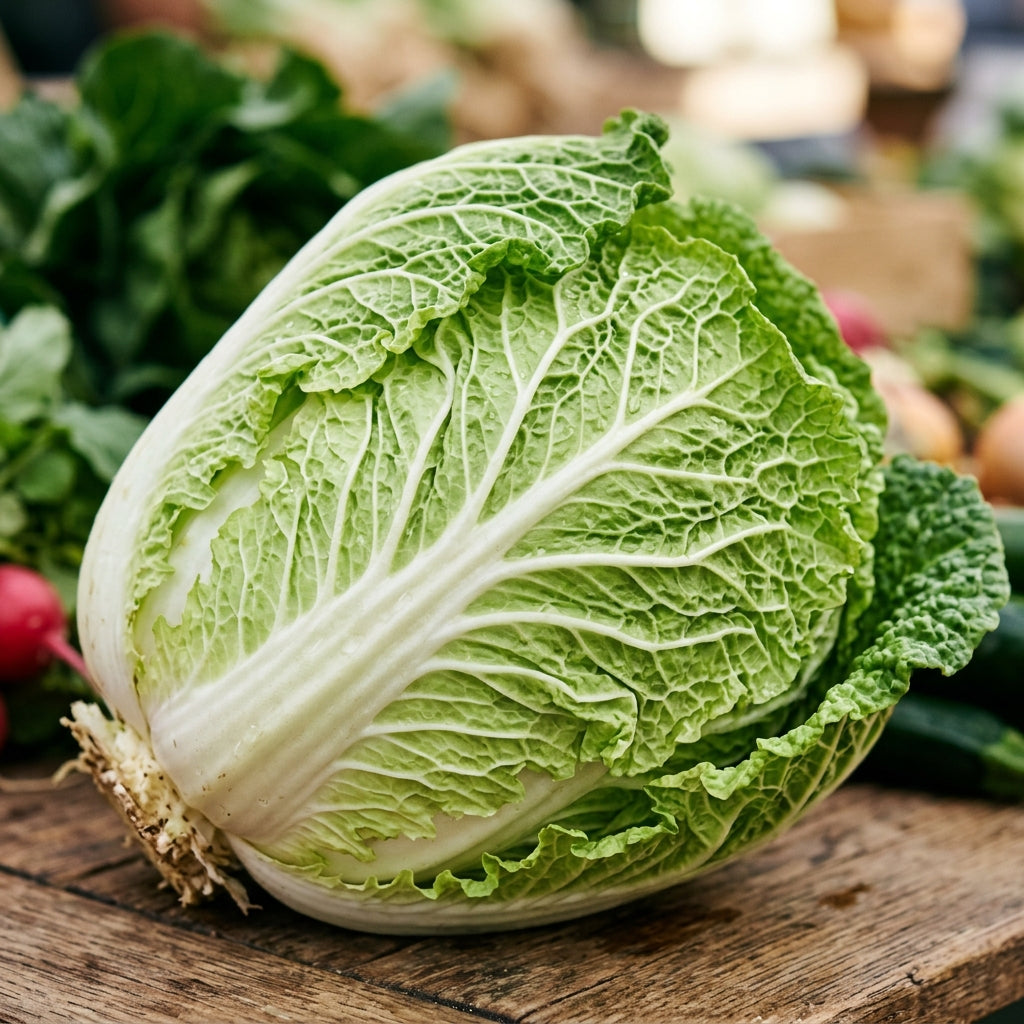
Chinese cabbage makes a dense, upright head with pale ribs and tender leaves.
Chinese cabbage (Brassica rapa subsp. pekinensis) is a fast-growing leafy brassica, also known as napa cabbage or Chinese leaf. Most varieties form an upright, barrel-shaped or cylindrical head with broad white ribs and soft green leaves, though some are looser or more compact. The crisp leaves are mild enough for salads and sturdy enough for soups, stir-fries and steaming.
Chinese cabbage or bok choy?
|
Chinese cabbage |
Forms a dense, upright or barrel-shaped head. |
|
Bok choy |
Forms open leaves with thick, pale stems. |
Related crops, different shapes
· Chinese cabbage: grows a tall or barrel-shaped head.
· Bok choy: forms open leaves on thick, pale stems.
· Fast crop: heads can be ready roughly ten weeks after sowing.
· Cool-season crop: steady autumn growth helps heads form.
· Crisp ribs: the broad midribs stay juicy when cooked.
· Brassica family: rotate its bed with cabbage relatives.
|
GOOD TO KNOW Chinese cabbage and bok choy are related but have different shapes. Napa or Chinese cabbage makes a head; bok choy grows open leaves on thick stems. |
CHAPTER 2
Choose Your Chinese Cabbage
Choose a variety for the harvest you want, then check whether it is suited to spring sowing or autumn heads.
Ask yourself five questions
1. Would I like full, crisp heads or tender baby leaves?
2. Can I sow in late summer and keep the young plants watered?
3. Do I have a bed with rich soil that holds moisture?
4. Can I protect the plants from caterpillars, pigeons and other pests?
5. Would I like to use the leaves fresh, cooked or both?
A beginner-friendly first planting
|
Choose a variety |
Look for a reliable autumn type. |
|
Sow in late summer |
Warm soil helps seedlings get established. |
|
Water steadily |
Even moisture supports crisp, quick growth. |
|
Protect the crop |
Fine mesh keeps many pests away. |
|
A COMMON MISTAKE Sowing the whole crop in spring. Cold spells can make young plants bolt; a late-summer sowing is usually more reliable for heads. |
|
TRY THIS Sow a small batch in late July and another a few weeks later. Compare which row makes the firmest heads in autumn. |
CHAPTER 3
Let’s Sow
Chinese cabbage grows quickly from seed, but its timing matters. Cold conditions early in growth and hot, dry weather later can trigger premature flowering. For dependable heads, sow a small batch in late summer, when the plants can grow steadily into cooler autumn days. Sow extra seeds, then thin the strongest plants to leave room for heads.
When to sow in Hungary
For autumn heads, sow outdoors from July through August. Choose a cool, cloudy day if you can, and water the bed before sowing if the soil is dry. Make a drill about 1 cm deep; rows can be 40–45 cm apart. Sow thinly, cover lightly and keep the seedbed moist. Once seedlings are established, thin them to about 30 cm apart for full heads or 15 cm for baby leaves. For a spring leaf crop, start under cover in April and protect it from cold spells.
What you need
· Chinese cabbage seeds suited to your sowing season
· A hand fork or small rake for preparing the bed
· A watering can with a fine rose and a clear label
· Insect-proof mesh to protect the crop
· Rich, moisture-retentive soil that drains freely
Sowing, step by step
1. Remove weeds and loosen the bed; work in mature compost if the soil is poor.
2. Make a shallow drill about 1 cm deep; space rows around 40–45 cm apart.
3. Sow seeds thinly, cover lightly and water gently.
4. Label the variety and date; keep the seedbed evenly moist.
5. Thin established seedlings to about 30 cm for full heads.
|
DON’T PANIC The thick white ribs are a normal part of Chinese cabbage. They are crisp, juicy and delicious in a stir-fry. |
|
A COMMON MISTAKE Letting seedlings dry out in hot weather. Keep the soil moist so plants continue growing without a check. |
CHAPTER 4
Seedling School
Chinese cabbage seedlings grow fast in warm, moist soil. Thin them while they are small and protect them from hungry insects and birds.
Thin with care
When the seedlings have several true leaves, choose the strongest and snip or lift the extras. Leave about 30 cm between plants for full heads, or 15 cm for baby leaves. If you sowed in modules, keep one sturdy seedling in each cell and plant it out while young, disturbing the roots as little as possible.
Why did my plant start flowering?
Chinese cabbage can bolt if young plants experience a long cold spell, or if the crop is stressed by heat and dry soil. Early spring sowing can be particularly risky. For autumn heads, sow from July onwards and keep plants growing steadily. Choose a bolt-resistant variety if your seed packet recommends one.
Water while they settle
Keep the seedbed evenly moist from sowing until the seedlings are established. Young plants have shallow roots and can dry quickly in summer. Water at the base in the morning, then check again during a hot spell. Once larger, plants still need regular moisture as their heads fill.
Feeding
Chinese cabbage likes fertile soil. Mix mature compost into the bed before sowing or planting. If growth looks slow, check water and weeds before adding feed. Avoid a heavy dose of nitrogen, which can encourage soft, loose growth rather than a firm head.
|
WHAT I WOULD DO I would enrich the bed with mature compost, sow in late July and shade the seedbed briefly if summer heat is severe. |
|
DON’T PANIC A flower stem means the plant is bolting. Pick the leaves while they are still usable and harvest the other plants from that sowing soon. |
CHAPTER 5
Ready for the Real World
Chinese cabbage can be sown directly in its growing place. If you raise seedlings under cover, plant them out while young and sturdy.
Before planting: check the plants and the bed
1. Choose healthy seedlings with several true leaves and no insect damage.
2. Water module-grown seedlings before planting.
3. Harden plants off gradually in a sheltered place for about a week.
4. Prepare a sunny bed with rich soil that holds moisture but drains freely.
5. Plant at the same depth as in the module; water in well.
When is it ready in Hungary?
For full autumn heads, direct sow from July into August, aiming for steady growth before the coldest weather. In the cooler northern or higher parts of Hungary, sow toward the earlier part of this window; in warm lowland gardens, a later July or early August sowing often avoids the strongest heat. Spring sowings can give baby leaves, but protect young plants from prolonged cold to reduce bolting.
Near Győr, late summer can bring hot afternoons and dry soil. Water seedlings regularly and use light shade during heatwaves. Once plants are growing well, cover the bed with fine insect mesh to keep butterflies, moths and pigeons away. Harvest firm heads in autumn before hard frost or prolonged wet weather damages the heart.
|
A COMMON MISTAKE Leaving plants uncovered until caterpillars appear. Put fine insect mesh over the bed as soon as you sow or plant. |
|
GOOD TO KNOW A Chinese cabbage head can be harvested whole, but young leaves can also be picked earlier for salads and cooked dishes. |
CHAPTER 6
Give Them a Good Home
Rich soil, steady water and fine mesh help Chinese cabbage form a clean, crisp head.
The right place
Choose an open, sunny site for autumn growing, with light afternoon shade if summer is hot. Chinese cabbage prefers deep, fertile soil that holds moisture without becoming waterlogged. Add mature compost before planting and remove weeds so young plants do not compete. Because it is a brassica, rotate it away from beds used recently for cabbage, broccoli, cauliflower or Brussels sprouts.
Spacing
For full-size heads, leave about 30 cm between plants and 40–45 cm between rows. For baby leaves, plants can be around 15 cm apart and harvested young. Give compact varieties slightly less room only if the seed packet recommends it.
Planting day
1. Water seedlings and prepare a moist, weed-free bed.
2. Make a hole just large enough for the root ball.
3. Set the plant at the same depth it grew in its module.
4. Firm gently and water deeply around each seedling.
5. Cover the bed with fine mesh after planting.
Growing in pots
Chinese cabbage can grow in a container at least 30 cm wide and deep. Choose a compact variety for small heads, fill the pot with fresh, fertile potting mix and keep it in partial shade during hot weather. Water regularly: this thirsty crop can dry out quickly in a pot. Baby leaves are easiest in containers.
|
TRY THIS Slice the white ribs and leafy tops together for a quick stir-fry. Add the leaves after the ribs so they stay tender. |
CHAPTER 7
Water, Feed & Keep Them Growing
Chinese cabbage grows fast when it has steady moisture, rich soil and protection from pests.
Watering
Water regularly so the soil stays evenly moist, especially while plants are young and as heads begin to form. A dry spell can slow growth, make leaves tougher and contribute to bolting. Water deeply at the base, preferably in the morning. Check containers daily in hot weather.
Mulch
When plants are established, add a layer of mature compost around them to hold moisture and suppress weeds. Keep mulch away from the stems so the base stays dry. A mulch helps the bed through a Hungarian summer, while regular watering keeps autumn heads growing steadily.
Feeding
A bed prepared with mature compost usually gives Chinese cabbage what it needs. If plants are pale or slow, first check moisture, soil compaction and crowding. Container crops may benefit from an occasional balanced liquid feed during active growth; follow the label and avoid overfeeding.
Keep plants healthy
Keep insect-proof mesh over plants grown for heads, making sure it is secured at the edges. Check under leaves for caterpillars, eggs and slugs, and watch for holes from flea beetles. Weed gently and rotate brassica crops to reduce disease problems such as clubroot. Harvest heads before they split or the heart begins to rot.
|
WHAT I WOULD DO I would use a late-summer sowing for heads, keep water steady, and harvest the firmest plants first before cold, wet weather. |
CHAPTER 8
Leaves, Heads & “What Is That?”
Chinese cabbage should make crisp, upright leaves and a firm heart. Changes in the centre or leaf surface can show what the plant needs.
Why are the leaves loose?
A loose head may simply need more time, or it may be growing in heat, dry soil or too much shade. Keep moisture steady, remove weeds and check that plants have enough room. Some varieties naturally make looser heads. If a flower stalk appears, harvest the usable leaves promptly; the crop is beginning to bolt.
The beginner’s trouble guide
|
Plant starts flowering |
Cold stress, heat or dry soil may cause bolting. Harvest usable leaves and check the rest of the row. |
|
Head stays loose |
Give it time, water and room; some varieties naturally form looser heads. |
|
Holes in the leaves |
Caterpillars, flea beetles or slugs may be feeding. Use mesh and check under leaves. |
|
Heart begins to rot |
Prolonged wet weather or damaged leaves can cause rot. Harvest promptly and remove spoiled leaves. |
|
Plants wilt in summer |
Water deeply and give young plants light afternoon shade during hot spells. |
|
DON’T PANIC A dense head forms only when growth is steady. If your plant stays open, the leaves are still good to eat. |
|
A COMMON MISTAKE Waiting too long after the head becomes firm. Cut it before it splits or the centre starts to deteriorate. |
CHAPTER 9
Can I Pick It Yet?
Yes—when the head feels firm and has filled out. Baby leaves can be picked earlier, and you can harvest the whole plant before a flower stalk appears.
What “ready” looks like
A full head should feel firm when you gently squeeze it, and the leaves should be crisp and healthy. Many varieties are ready around ten weeks after sowing, but check the packet because varieties differ. Cut the head low with a clean knife. For baby leaves, pick a few from several plants or cut a young plant and let it regrow.
Harvest from late summer to autumn
|
Check the head |
Squeeze gently; it should feel firm and filled out. |
|
Cut cleanly |
Slice through the stem just below the lowest leaves. |
|
Use baby leaves |
Pick a few young leaves or cut a small plant. |
|
Harvest promptly |
Use heads before they split or hard frost arrives. |
How often should I check?
Check the bed once or twice a week as heads develop. Look under the leaves for caterpillars or slugs, and remove damaged outer leaves. Harvest heads as soon as they feel firm, before they split or wet weather spoils the heart. You can leave a short stump after cutting; it may produce a few extra leaves or a smaller head.
|
READY TO HARVEST? A full head should feel firm when gently squeezed. Cut it low with a clean knife before it splits. Young leaves can be picked earlier, and the pale ribs are ready to eat too. |
|
TRY THIS Taste a raw slice of the white rib, then stir-fry a few pieces. The same crisp part of the leaf can be refreshing raw or tender and juicy when cooked. |
CHAPTER 10
From the Garden to the Kitchen
The pale ribs are crisp and juicy, while the leafy parts are tender and mild.
The first rule: keep it crisp
Rinse the leaves well and remove any damaged outer ones. Slice the ribs and leafy parts together for a quick stir-fry, or separate them so the thicker ribs can cook a little longer. Young leaves are lovely raw in salads, while a whole head can be steamed, braised or added to soup. Chinese cabbage also works well in fermented dishes such as kimchi.
Match Chinese cabbage to the dish
· Raw leaves: shred for salads, slaw or wraps.
· Stir-fry: cook the sliced ribs briefly, then add leaves.
· Soup: add near the end so the leaves stay tender.
· Whole leaves: steam or use to wrap a filling.
|
FROM THE KITCHEN Fast cabbage stir-fry: slice the ribs and leafy tops. Cook the ribs briefly with garlic and ginger, then add the leaves and a splash of soy sauce until just wilted. |
Storing fresh Chinese cabbage
Keep a whole, unwashed head in the refrigerator and use it within a week or two for the best crispness. Remove damaged outer leaves, but leave the head intact until you need it. Once cut, wrap the remaining piece and use it sooner, as the cut edges can dry out.
When you have more than you can use
Chinese cabbage is best fresh, but it can be fermented into kimchi or another salted pickle. Keep clean hands and equipment, follow a tested recipe and refrigerate after fermentation. You can also blanch and freeze chopped leaves for cooked dishes, though they will be softer after thawing. Harvesting one head at a time helps avoid a glut.
CHAPTER 11
Next Season Starts Now
A few notes about sowing dates, heat and head formation can help you plan a better Chinese cabbage crop next year.
Keep a tiny garden record
· Variety name and whether it resisted bolting
· Date seeds were sown and seedlings appeared
· When plants were thinned or moved outside
· How often the bed needed water in summer
· When the first heads felt firm
· Which sowing date avoided the strongest heat
· Whether mesh kept pests away
Saving seed and planning another crop
Chinese cabbage is usually grown as an annual, but it can flower and set seed if left in the ground. Choose a healthy plant with the head shape and flavour you liked, then allow it to flower and dry its seed pods. Chinese cabbage can cross with other flowering Brassica rapa crops, so saved seed may not grow true if they flower nearby. For predictable heads next year, fresh seed is easiest.
1. Choose a healthy plant with the head and flavour you liked.
2. Leave it in place and let the flower stem grow.
3. Allow the flowers to fade and the seed pods to dry.
4. Collect pods before they split and scatter seed.
5. Dry fully, label the variety and year, then store cool and dry.
|
GOOD TO KNOW A short stump left after cutting may produce extra leaves or a smaller second head, though results vary by variety and growing conditions. |
|
WHAT I WOULD DO I would cut heads one at a time as they become firm and keep the rest growing until I need them. |
COME GROW WITH ME
CHINESE CABBAGE CHEAT SHEET
The page to come back to when you have soil on your hands and no time to reread the whole book.
|
SOW |
July–August outdoors |
About 1 cm deep; rows 40–45 cm apart |
|
GERMINATE |
Keep the seedbed evenly moist |
Thin to 30 cm for heads |
|
POSITION |
Sun; light afternoon shade in heat |
Rich soil; steady moisture |
|
PLANT |
Direct sow for autumn heads |
Transplant young module seedlings |
|
HARVEST |
Autumn, roughly 10 weeks after sowing |
Cut whole head when firm |
|
Water |
Keep soil evenly moist during active growth. |
|
Feed |
Work mature compost into poor soil before sowing. |
|
Thin |
Leave about 30 cm between full-size plants. |
|
Protect |
Cover with fine insect mesh from early on. |
|
Harvest |
Cut firm heads before they split or turn soft. |
|
Next season |
Try two late-summer sowings for a longer autumn harvest. |
|
HUNGARY IN ONE LINE Sow Chinese cabbage in late summer, water it steadily, protect it with mesh and harvest firm autumn heads before hard frost. |
COME GROW WITH ME • CHINESE CABBAGE
Horticultural reference: RHS, How to grow Chinese cabbage. Seasonal guidance is adapted for Hungarian home gardens.