

A practical vegetable garden series
From one small seed to a vine full of crisp, wonderfully bitter fruit.
|
GROW WITH US Bitter gourd is a fun warm-season challenge. Give it sun, a strong trellis and a little patience, and enjoy learning a new flavour from your own garden. |
Written for home gardeners in Hungary
CHAPTER WELCOME
Your bitter gourd season starts here
This book follows the whole journey: seed → seedling → garden → care → harvest → kitchen → next season.
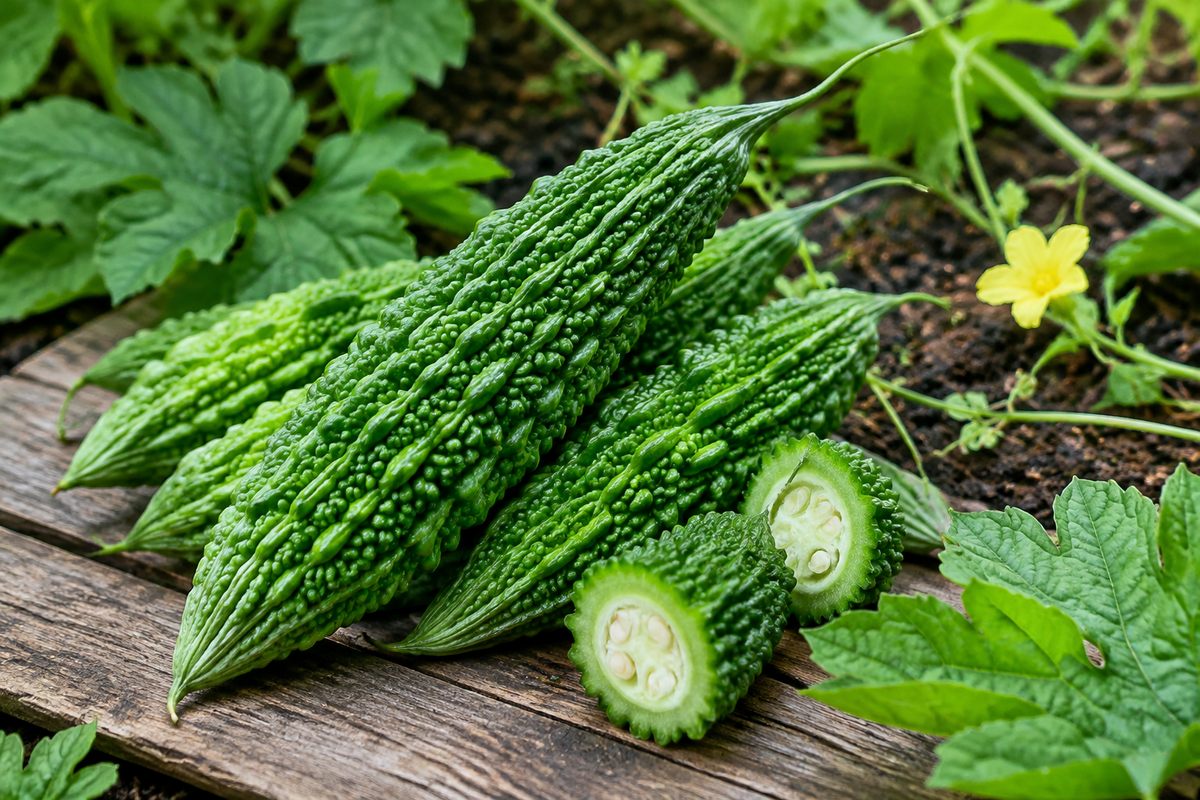
Bitter gourd is a tropical climbing vine with bright yellow flowers and distinctive ridged fruit. We usually pick the fruits green and young, before they turn yellow and split to show their red-coated seeds.
It needs warmth and patience. In Hungary, choose a sunny, sheltered place and wait for warm nights; a protected growing spot can help extend our shorter season.
Our Hungarian calendar
|
Late Apr–early May |
Sow indoors in warm individual pots. |
|
May |
Raise seedlings in bright, steady warmth. |
|
Late May–June |
Plant out only when nights are mild. |
|
June–July |
Train vines; watch for female flowers. |
|
July–September |
Pick firm green fruits regularly. |
|
Late season |
Clear vines before cold nights. |
|
WHAT I WOULD DO In most Hungarian gardens I would raise a young plant indoors, then wait for genuinely warm nights before planting it out. Bitter gourd values warmth more than an early start, and one cold week can set it back. |
The rule for this series: dates guide us, but the plant and the weather make the final decision.
CHAPTER 1
Meet the Bitter Gourd
Before we sow anything, let’s understand the tropical climber we are inviting into the garden.
Bitter gourd (Momordica charantia) belongs to the cucumber family. It is grown as a warm-season annual in Hungary. The vines grow quickly once settled, using tendrils to climb, and can cover a trellis with lobed leaves. Separate male and female flowers appear on the same plant; a tiny fruit is visible behind each female flower.
Two common fruit styles
|
Chinese types |
Often long and pale green with broad, rounded ridges; usually milder, though variety makes a difference. |
|
Indian types |
Often darker, shorter and more deeply ridged, with a strong, distinctive bitterness. |
Then choose by the fruit you enjoy
· Chinese types: often long and pale green, with broad, rounded ridges and a milder bitterness.
· Indian types: often shorter, darker green and more strongly ridged or warty, with a more pronounced bitter taste.
· White or pale types: usually lighter in colour and sometimes milder; check the seed description because shapes and flavours vary.
· Small-fruited types: handy where summers are short, as some varieties mature earlier and are easier to pick frequently.
· Open-pollinated varieties: useful if you want to save seed, but neighbouring bitter gourd varieties may cross-pollinate. F1 hybrids are not reliable for saving true-to-type seed.
· F1 hybrids: often vigorous or early, but saved seed will not reliably reproduce the parent plant.
|
GOOD TO KNOW Male and female flowers are separate, but they grow on the same vine. A female flower has a tiny fruit behind it; if that flower is pollinated, the little fruit begins to swell. |
CHAPTER 2
Choose Your Bitter Gourd
The best variety is one that has time to crop in your garden and suits the bitterness and fruit shape you like.
Ask yourself five questions
1. Will it grow in a greenhouse, polytunnel or a warm outdoor spot protected from wind?
2. Can I give a vigorous vine a strong trellis and several hours of direct sun?
3. How long is my warm season? Earlier varieties are a sensible choice in cooler or exposed places.
4. Do I prefer long, smoother Chinese fruit or shorter, deeply ridged Indian types?
5. Will I cook the fruit often enough to pick it young every few days?
A beginner-friendly first collection
|
1 early variety |
A sensible choice for a shorter or cooler Hungarian summer. |
|
1 fruit type you enjoy |
Choose long and milder, or short and more strongly ridged. |
|
1 protected growing place |
A greenhouse or warm, sheltered wall can make a real difference. |
|
1 reliable trellis |
Decide where the vine will climb before planting. |
|
A COMMON MISTAKE Sowing too early and ending up with a large, weak vine before the garden is warm. A compact seedling planted at the right time is a much better start. |
|
TRY THIS Soak the seed overnight if the packet recommends it, then sow in its own pot. Label the pot immediately; seedlings can look very similar when young. |
CHAPTER 3
Let’s Sow
Bitter gourd seeds have a hard coat. Warmth, moisture and a little patience help them wake up; cold compost and overwatering slow them down.
When to sow in Hungary
Start indoors about four weeks before you expect to plant out. For many Hungarian gardens, late April to early May is a useful window. Sow earlier only if you can keep seedlings very bright, warm and growing steadily. The aim is a compact young plant ready for warm weather, not a large vine trapped indoors.
What you need
· Fresh bitter gourd seed from a reliable packet
· Individual small pots with drainage, so roots can be moved with little disturbance
· A warm, bright place and labels for the varieties
· Seed-starting mix that is moist but never waterlogged
· A trellis or other strong support ready before the vine begins to climb
Sowing, step by step
6. If the seed packet recommends soaking, soak seeds in lukewarm water overnight. Some gardeners gently nick the hard coat; avoid cutting deeply or damaging the seed inside.
7. Fill individual pots with moist seed-starting mix. Sow one seed per pot about 1.5–2 cm deep, following the packet if it gives a different depth.
8. Cover lightly, water gently and label each pot with the variety and sowing date.
9. Keep the pots warm, ideally around 24–30°C for germination. Check daily and keep the mix lightly moist, not saturated.
10. As soon as a shoot appears, give it the brightest light available while keeping it comfortably warm.
|
DON’T PANIC A hard-coated seed may take longer to sprout than you expect. Keep it warm and lightly moist, and give it time before deciding it has failed. |
|
A COMMON MISTAKE Putting a newly emerged seedling in a cold, dim place. Bitter gourd wants bright light and warmth from the moment it comes up. |
CHAPTER 4
Seedling School
A warm, undisturbed seedling will establish faster than an oversized plant whose roots have been knocked about.
Light and warmth first
Place seedlings in a bright, warm position. Turn pots if growth leans toward the light, and avoid cold windowsills or draughts. A short spell of chilly weather can pause growth, so do not rush young plants outdoors.
Potting on
If roots fill the first pot before the weather is warm enough, move the seedling carefully into a slightly larger pot. Keep the root ball intact; bitter gourd dislikes unnecessary root disturbance. Avoid moving it into a huge container where wet compost can stay cold.
Water without babying them
Water when the surface begins to dry, then let excess drain away. Keep the compost evenly moist but not soggy. Cool, waterlogged pots are a common cause of slow growth and weak roots.
Feeding
Fresh compost usually supports young seedlings. Once the plant is established and growing strongly, use a balanced liquid feed at the rate on its label. A very leafy plant with few flowers may be receiving too much nitrogen.
|
WHAT I WOULD DO I would choose a compact seedling with healthy green leaves and roots that hold the compost together, then move it gently. I would not rush it outside. |
|
DON’T PANIC If growth pauses after potting on, keep the plant warm and avoid soaking the compost. A little pause is often less harmful than disturbing the roots again. |
CHAPTER 5
Ready for the Real World
A seedling raised indoors needs a gradual introduction to outdoor light, wind and changing temperatures.
Hardening off: about 7–10 days
11. Begin on a mild day in a sheltered spot with bright shade.
12. Bring the plant back inside or into protection before the evening cools.
13. Increase outdoor time and sunlight gradually over the week.
14. Keep it out of strong wind, which can tear leaves or dry a small pot quickly.
15. By the end, it should be comfortable outdoors during the day. Leave it out overnight only when nights are consistently warm.
When can it stay outside in Hungary?
Bitter gourd is even more sensitive to cold than many familiar summer vegetables. Wait until frost risk has passed, the soil is warm and nights are reliably mild. For open gardens, late May or early June is often a safer guide than the first sunny spell; a warm greenhouse can extend the season, but do not set a cold plant into cold soil.
A sheltered Budapest courtyard may warm earlier than an exposed garden near Győr or a cool hollow. Western Hungary can still have chilly nights after sunny days, while warmer southern and urban gardens may gain useful extra heat. Use the local forecast and feel the soil: it should be warm, not merely frost-free.
|
A COMMON MISTAKE Hardening off in one sunny afternoon. Indoor leaves can scorch and wind can damage a tender vine; increase exposure over a week. |
|
GOOD TO KNOW The calendar date is only a guide. A cold night or cold soil can stall a heat-loving vine even when the daytime feels like summer. |
CHAPTER 6
Give Them a Good Home
A little planning now gives this vigorous climber the warmth, space and support it needs for a productive summer.
The right place
Choose the sunniest sheltered position you can provide, ideally with at least six hours of direct sun. The soil should be fertile, rich in organic matter and well drained. A greenhouse or polytunnel is helpful in cooler locations; outdoors, a south-facing wall or protected sunny bed can improve the chances of a good crop.
Spacing
Give each plant room to spread its leaves and reach the support. As a practical guide, allow about 60–90 cm between plants, or more for especially vigorous varieties. Follow the seed packet and avoid crowding, which reduces airflow and makes harvesting harder.
Planting day
16. Water the pot beforehand so the root ball is evenly moist.
17. Prepare a hole slightly larger than the pot and handle the seedling gently by its root ball.
18. Set it at the same depth it was growing, firm the soil lightly and water at the base.
19. Put the trellis, netting or strong wires in place now, before the vine becomes tangled.
20. Mulch the soil once it is warm to reduce evaporation, keeping the mulch away from the stem.
Growing in pots
Choose a large, deep container with several drainage holes—around 30 litres or more is a useful starting point for one plant. Add a sturdy trellis and check moisture often: a container in a sunny Hungarian summer can dry quickly. Smaller pots make watering and feeding much harder to manage.
|
TRY THIS Before planting, stand beside the future trellis and check that you can reach the fruit easily. A harvest-friendly support makes a surprisingly big difference. |
CHAPTER 7
Water, Feed & Help It Climb
Once the vine is growing, consistent moisture, a reliable support and enough warmth are the foundations of a good harvest.
Watering
Water deeply at the base and keep the root zone evenly moist, especially during flowering and fruit development. In hot, windy weather, pots may need daily attention. Do not let the plant swing from very dry to soaked; stress can cause flowers or tiny fruits to drop.
Mulch
When the soil has warmed, a light layer of organic mulch helps slow evaporation and keeps roots more comfortable through summer heat. Leave a small clear space around the stem so it stays dry and easy to inspect.
Feeding
Work mature compost into the bed before planting. Once the vine is established, feed modestly with a balanced vegetable fertiliser according to its label. Too much nitrogen encourages leafy growth at the expense of flowers and fruit.
Support and training
Guide the young vine toward a strong trellis, net or wires and tie it loosely if needed. Tendrils will grip as it grows. A vertical support keeps fruit clean, improves airflow and makes the green fruits much easier to spot and pick. Check that the structure can carry a leafy vine in summer wind.
|
WHAT I WOULD DO I would water the soil deeply, mulch after it warms, guide the vine onto its support and check the plant every few days for new female flowers and fruit. |
CHAPTER 8
Flowers, Fruit & “What Is That?”
Flowers and small fruits can appear before the plant is ready to crop reliably. Warmth, pollination and steady care all matter.
Flowers but no fruit?
Bitter gourd produces separate male and female flowers on the same plant. Male flowers usually appear first. A female flower has a tiny fruit behind it; bees and other insects transfer pollen between flowers. If pollinators are scarce in a greenhouse, gently move pollen from a freshly opened male flower to a female flower with a small soft brush.
The beginner’s trouble guide
|
Flowers drop without fruit |
The weather may be too cool or hot, or flowers may not be pollinated. Encourage insect visits; hand-pollinate in a closed greenhouse if needed. |
|
Leaves wilt in the afternoon |
Check soil moisture first. A plant in hot sun may wilt briefly, but persistent wilting can mean dry roots or waterlogged soil. |
|
Lots of leaves, few flowers |
The plant may need more sun, or may be receiving too much nitrogen. Keep feeding moderate and wait for warm conditions. |
|
Powdery white patches |
Could be powdery mildew. Improve airflow, water at the soil and remove badly affected leaves. |
|
Tiny fruits turn yellow and fall |
Poor pollination, uneven moisture or temperature stress may be involved. Check flowers, watering and warmth before adding fertiliser. |
|
DON’T PANIC A few dropped flowers are normal, especially early in the season. Look for female flowers, check that the vine is warm and healthy, and give pollinators a chance to do their work. |
|
A COMMON MISTAKE Feeding heavily when flowers drop. First check temperature, watering and pollination; extra nitrogen can make the vine leafy without solving the cause. |
CHAPTER 9
Can I Pick It Yet?
Yes—and with bitter gourd, picking at the right stage is the secret to tender fruit and more flowers.
What “ready” looks like
Pick while the fruit is firm, glossy and green or pale green, before it begins turning yellow or orange. Size depends on the variety, so use the packet as a guide and check the fruit every day or two once it starts swelling. Over-mature fruit becomes softer, more strongly flavoured and may split open.
Harvest by purpose
|
Cook today |
Pick firm, glossy green fruit and cook it the same day for best texture. |
|
A few days away |
Harvest at the usual green stage and keep unwashed in a perforated bag in the refrigerator. |
|
Prefer less bitterness |
Choose young fruit, remove the soft centre and salt slices briefly before cooking. |
|
Seed saving |
Leave one marked fruit until fully orange and split; that fruit is for seed, not the usual green harvest. |
How often should I pick?
In warm weather, inspect the vine every day or two. Bitter gourd grows quickly, and a fruit that looks small today can pass its tender stage in a few days. Regular picking keeps the plant producing and prevents hidden fruits from ripening and splitting on the vine.
|
READY TO HARVEST? Look for a firm, glossy green fruit that has reached the size described for its variety. Pick before yellow or orange appears; check the vine every day or two in warm weather. |
|
TRY THIS Cook a few slices with and without a short salting-and-rinsing step. Taste them side by side and decide how much bitterness you like. |
CHAPTER 10
From the Garden to the Kitchen
Bitter gourd has a bold flavour, but a few simple preparations make it easy to enjoy.
The first rule: prepare it your way
Rinse the fruit, trim the ends and slice it lengthwise. Remove the spongy centre and seeds from larger fruits. For a gentler flavour, salt the slices briefly and rinse or squeeze them before cooking. Young fruit can be sliced thinly and stir-fried, sautéed with onion and garlic, or added to curries and soups.
Match the fruit to the dish
· Young, tender green fruit: slice thinly for quick stir-fries, omelettes or curries.
· Long Chinese types: hollow and stuff, or cut into half-moons for sautéing.
· Small, deeply ridged types: slice thinly and cook with onion, spices or egg.
· Very bitter fruit: salt briefly, rinse and cook with stronger flavours such as garlic, chilli or tomato.
|
FROM THE KITCHEN Quick bitter gourd stir-fry: slice young fruit thinly, salt briefly if you prefer, then cook with onion, garlic and a little oil until tender. Finish with egg, tomato or spices to taste. |
Storing fresh bitter gourd
Keep unwashed fruit in a perforated bag in the refrigerator and use it within several days for the best texture. Avoid leaving picked fruit in a hot kitchen. If the fruit is already yellowing or splitting, it has passed the usual green vegetable harvest stage.
When you have more than you can use
Slice and blanch the fruit briefly before freezing for cooked dishes; the texture will soften after thawing. You can also cook a larger batch of curry or stir-fry and freeze meal-size portions. For seed saving, leave one healthy fruit on the vine until fully ripe and orange, then collect and dry the mature seeds separately.
CHAPTER 11
Next Season Starts Now
The best time to plan next year’s bitter gourd is while you can still remember what the Hungarian summer gave you.
Keep a tiny garden record
· Variety name and fruit type: Chinese, Indian, white or small-fruited
· Sowing date and when it first went outside
· Date of the first female flowers and first harvest
· Flavour and bitterness: would you grow it again?
· How many fruits set, and whether hand pollination helped
· How the vine coped with cool nights and summer heat
· How much trellis space and watering it needed
Saving bitter gourd seed
Bitter gourd is not a reliably hardy perennial in Hungary, so start with fresh seed next season. If you want to save your own, leave a healthy fruit on the vine until it turns orange and splits. The bright red coating around mature seeds is normal. Save seed only from a plant whose fruit and flavour you liked; different varieties can cross-pollinate, so saved seed may not come true if several are flowering nearby.
21. Choose one healthy fruit from a vigorous, productive plant and mark it to leave on the vine.
22. Wait until it turns fully orange and opens. Wear gloves if you prefer, then remove the seeds from the red pulp.
23. Wash seeds thoroughly and discard any damaged or poorly formed ones.
24. Spread the seeds in a single layer and dry completely in a warm, airy place away from strong direct sun.
25. Label the dry seeds with variety and year, then store cool and dry in a paper packet inside a sealed container.
|
GOOD TO KNOW The ripe fruit turns orange and opens to show seeds in bright red coverings. That is a striking sight in the garden, but the normal vegetable harvest is the green, immature fruit. |
|
WHAT I WOULD DO At the end of the season I would note whether the plant had enough heat, which fruit type I preferred and whether a greenhouse or sheltered wall improved the harvest. |
COME GROW WITH ME
BITTER GOURD CHEAT SHEET
The page to come back to when you have soil on your hands and no time to reread the whole book.
|
SOW |
Late April–early May indoors |
About 1.5–2 cm deep; warm pots |
|
GERMINATE |
Warm, lightly moist compost |
Bright light as soon as shoots appear |
|
PLANT OUT |
Late May–June, weather permitting |
Warm soil and mild nights; harden off |
|
POSITION |
Full sun; sheltered and warm |
Fertile, well-drained soil; trellis |
|
SPACE |
About 60–90 cm between plants |
Adjust for variety; give vine airflow |
|
Water |
Keep soil evenly moist, especially in hot weather and while fruits swell. |
|
Feed |
Use mature compost and a moderate balanced feed; avoid excess nitrogen. |
|
Support |
Provide a strong trellis before planting; guide tendrils as the vine grows. |
|
Pollination |
Male and female flowers are separate. In a greenhouse, hand-pollinate if fruit does not set. |
|
Harvest |
Pick firm green fruits before they yellow; check the vine every day or two. |
|
Big reminder |
Cold soil, cold nights, root disturbance and missed over-mature fruit are common setbacks. |
|
HUNGARY IN ONE LINE Sow warm indoors in late spring, plant out only when the soil and nights are warm, give the vine a sunny sheltered trellis, and harvest the fruits young and green. |
COME GROW WITH ME • BITTER GOURD
Horticultural references consulted for this edition include UC Agriculture and Natural Resources, North Carolina State University Extension, University of Florida IFAS Extension and Tamil Nadu Agricultural University guidance on bitter gourd.