

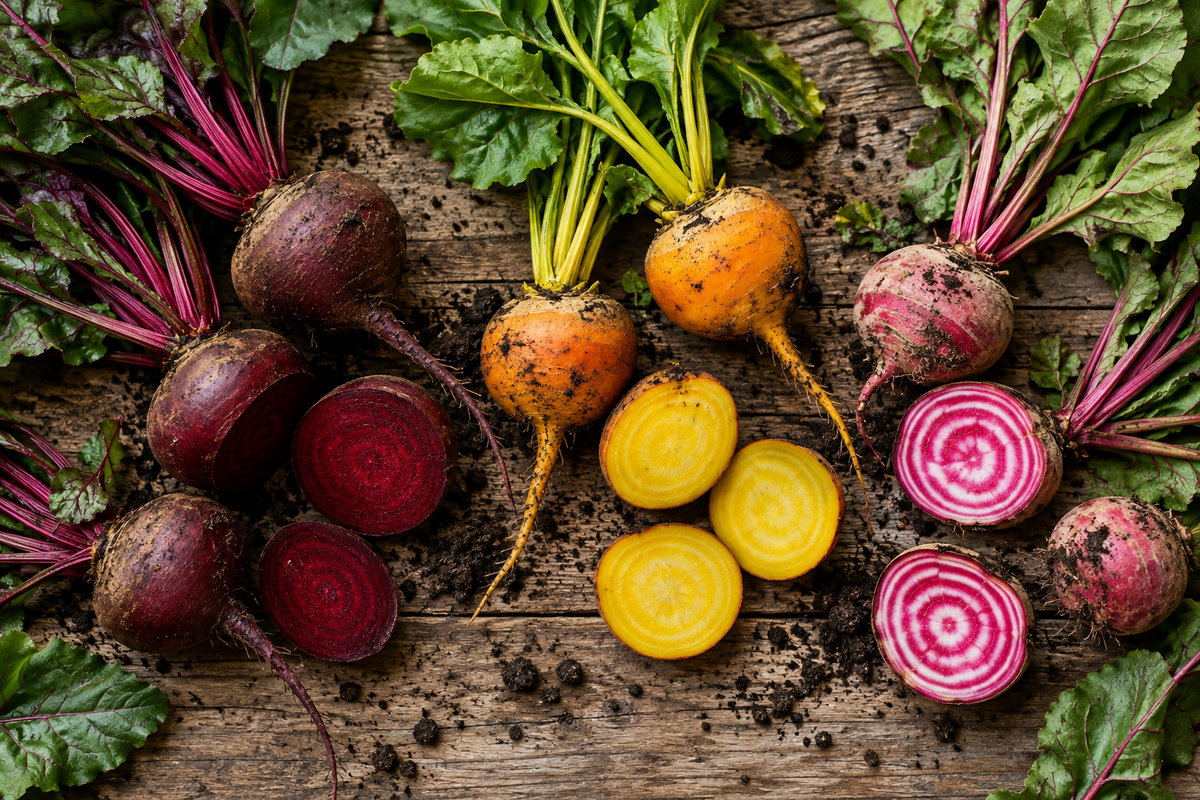
A practical vegetable garden series
From one corky seed cluster to sweet, colourful roots from your own soil.
|
GROW WITH US Beetroot is one of the easiest ways to turn a few seeds into a real harvest. Give it loose soil, steady moisture and enough room to swell, and you can enjoy both tender roots and edible leaves. |
Written for home gardeners in Hungary
CHAPTER WELCOME
Your beetroot season starts here
This book follows the whole journey: seed → seedling → garden → care → root swelling → harvest → kitchen → next season.
Beetroot is one of the friendliest vegetables for a new gardener. It grows quickly, needs little space, works in beds or containers, and gives you two crops from one plant: sweet roots and edible leaves.
It can still raise questions. Why did several seedlings appear from one “seed”? Do I need to thin them? Why is the root staying small? When is it actually ready? This book answers those questions and helps you grow tender beetroot instead of oversized, woody roots.
Our Hungarian calendar
|
March–April |
Begin direct sowing as soil warms; protect very early sowings. |
|
April–May |
Thin seedlings; make another short sowing every 2–3 weeks. |
|
June–July |
Keep sowing for later crops; water during dry spells. |
|
June–August |
Harvest baby and medium roots; keep later sowings growing steadily. |
|
September–October |
Lift main crops before hard frost; store sound roots if wanted. |
|
Autumn–winter |
Use stored roots, review varieties and plan next year’s sowings. |
|
WHAT I WOULD DO In Hungary I would sow several short rows rather than one long row. A small sowing in spring, another a few weeks later and a final summer sowing gives much better roots—and far fewer beetroot emergencies in the kitchen. |
The rule for beetroot: sow little and often, keep the soil steadily moist, and harvest while the roots are still tender.
CHAPTER 1
Meet Beetroot
Before we sow, let’s understand the unusual little seed and the root we are trying to grow.
Beetroot is a cool-season root vegetable related to chard. What looks like one rough “seed” is often a cluster containing several embryos, so more than one seedling may appear. The swollen root grows best in loose soil with steady moisture.
One seed—or several?
|
Seed clusters |
Most beetroot “seeds” are corky clusters that can produce more than one seedling. |
|
Monogerm seed |
Some modern varieties are bred to produce mainly one seedling per seed, which reduces thinning. |
Then choose by what you want to harvest
· Round red: classic, dependable and versatile.
· Golden: sweet, colourful and less staining.
· Striped: beautiful sliced; excellent for salads and roasting.
· Cylindrical: long roots that give even slices.
· Bolt-resistant: useful for early sowings when cold can trigger flowering.
· Baby beetroot: simply roots harvested young at closer spacing.
|
GOOD TO KNOW Beetroot and Swiss chard are very close relatives. One was selected mainly for its swollen root, the other for its leaves and stems—which is why beetroot leaves are perfectly edible too. |
CHAPTER 2
Choose Your Beetroot
The best beetroot is not necessarily the biggest. Choose a variety that suits your sowing season, soil, space and kitchen.
Ask yourself five questions
1. Do I want baby roots, medium roots or larger roots for storage?
2. Am I sowing early, when a bolt-resistant variety would be useful?
3. Do I prefer classic red, golden, striped or cylindrical roots?
4. Will I grow in open ground, a raised bed or a container?
5. Do I want one large harvest or small sowings spread through the season?
A beginner-friendly way to start
|
Classic round red |
The simplest all-purpose choice for roasting, boiling, salads and pickling. |
|
Golden beetroot |
Sweet, colourful and less likely to stain everything red in the kitchen. |
|
Striped beetroot |
Beautiful sliced raw or lightly cooked; a fun variety for children and curious gardeners. |
|
Bolt-resistant type |
A sensible choice for early spring sowing when cold spells can trigger flowering. |
|
A COMMON MISTAKE Choosing only by colour and forgetting sowing time. If you want a very early crop, bolt resistance matters more than whether the root is red, gold or striped. |
|
TRY THIS Grow two colours side by side and label them carefully. Beetroot is compact enough that experimenting with a second variety costs very little garden space. |
CHAPTER 3
Let’s Sow
Beetroot is usually happiest sown directly where it will grow. The seeds are large enough to handle easily, which makes this an excellent first root crop.
When to sow in Hungary
For most Hungarian gardens, begin outdoor sowing when the soil has started to warm in spring—often from March or April—and continue in small batches into July for a long harvest. Very early sowings are more vulnerable to cold and bolting, so use a bolt-resistant variety and protection if you want to start early.
What you need
· Fresh beetroot seed
· Loose, weed-free soil or a deep container
· A rake or hand tool for making shallow drills
· Labels so successive sowings do not become confusing
· A watering can with a gentle rose
Sowing, step by step
6. Make a shallow drill about 2–2.5 cm deep in prepared soil.
7. Water the drill first if the soil is dry, then let the water soak in.
8. Place seed clusters roughly 5–10 cm apart, depending on whether you want baby or larger roots.
9. Cover with fine soil, firm gently and label the row with the variety and date.
10. Keep the seedbed evenly moist until the seedlings are established.
|
DON’T PANIC Several seedlings from one seed cluster are normal. Thin them for larger roots, or leave a small cluster and harvest the roots young. |
|
A COMMON MISTAKE Sowing the whole packet at once. Beetroot grows quickly, so successive small sowings give you tender roots for months instead of one enormous harvest. |
CHAPTER 4
Seedling School
Beetroot seedlings are uncomplicated once you understand that one seed cluster may produce several plants.
Several seedlings from one seed
Do not assume you sowed badly when two or three shoots appear together. This is normal for many beetroot varieties. You can thin them, or deliberately grow small clusters for baby roots.
Thinning
If you want medium or larger roots, thin crowded seedlings so the remaining plants have roughly 8–10 cm of space. Thin when the soil is damp and disturb neighbouring roots as little as possible. Young thinnings are edible and can go straight into a salad.
Water without flooding them
Keep young plants evenly moist, especially after thinning and during dry spring weather. Constantly soggy soil is unnecessary, but repeated drought can slow growth and make mature roots coarse.
Feeding
Beetroot does not need heavy feeding in reasonably fertile garden soil. Too much nitrogen encourages lush leaves at the expense of roots. Compost incorporated before sowing is usually more useful than repeatedly feeding the crop.
|
WHAT I WOULD DO I thin beetroot when the soil is damp, then eat the young leaves and seedlings. It turns a necessary garden job into the first tiny harvest of the season. |
|
DON’T PANIC If the top of the beetroot begins showing above the soil, that is usually normal. Many varieties develop with their shoulders visible; you do not need to bury them deeply. |
CHAPTER 5
Ready for the Garden
Beetroot normally begins and finishes in the same place, so “planting out” is mostly about giving direct-sown seedlings the room and conditions to develop good roots.
Preparing the bed
11. Choose an open, sunny position; light shade is acceptable in very hot summer conditions.
12. Remove stones, hard clods and perennial weeds so roots can swell evenly.
13. Rake the surface to a fine tilth, but do not compact the soil.
14. Add mature compost if the soil is poor, but avoid fresh manure immediately before sowing.
15. Mark short rows so you can make another sowing every few weeks instead of sowing the whole packet at once.
What about modules?
Beetroot can be started in modules when you want an early crop or your garden soil is not ready. Sow one seed cluster per module and transplant while plants are still young, keeping the root ball intact. You can also plant a small cluster together and harvest the roots young.
In Hungary, module sowing can be useful during an unsettled early spring, while direct sowing becomes simpler once the soil is workable and warming. Avoid leaving seedlings cramped in modules for too long.
|
A COMMON MISTAKE Transplanting beetroot seedlings after they have become large and root-bound. If you start them in modules, move them while young and disturb the root ball as little as possible. |
|
GOOD TO KNOW Beetroot tolerates cool weather, but an early cold spell can encourage bolting. Very early sowings are safer with a bolt-resistant variety and temporary fleece or cloche protection. |
CHAPTER 6
Give Them a Good Home
Beetroot does not demand much room, but root crops are unforgiving of hard, compacted soil and prolonged drought.
The right place
Choose fertile, free-draining soil in sun. Raised beds are excellent if your native soil is heavy. In very light sandy soil, add compost to improve water-holding capacity before sowing.
Spacing
For useful medium roots, aim for about 8–10 cm between plants and roughly 25–30 cm between traditional rows. For baby beetroot you can grow closer and harvest alternate roots early, giving the remaining plants more room.
After thinning
16. Water the row after thinning if the soil is dry.
17. Remove weeds while they are small; beetroot leaves eventually shade the soil, but seedlings compete poorly at first.
18. Mulch lightly once plants are established if hot, dry weather is expected.
19. Do not earth soil heavily over the shoulders of swelling roots; some varieties naturally sit partly above the soil.
20. Harvest a few young leaves if you like, but leave plenty of foliage to feed the developing root.
Growing in pots
Beetroot is excellent in containers. Choose a pot at least around 25–30 cm deep, with drainage holes and enough surface area for useful spacing. Round varieties are easiest. Keep container compost consistently moist because pots dry much faster during a Hungarian summer.
|
TRY THIS Sow a short row beside lettuce or another quick crop. Beetroot is compact and makes excellent use of small gaps, especially when you harvest some roots young. |
CHAPTER 7
Water, Weed & Keep Them Growing
Beetroot care is mostly quiet maintenance. The aim is uninterrupted growth from germination to harvest.
Watering
Water during dry spells so the soil stays reasonably even rather than swinging from dust-dry to saturated. This is especially important while roots are swelling. Deep watering less often is better than constantly wetting only the surface.
Mulch and weeds
Keep rows weed-free with shallow hoeing or hand weeding so you do not damage the roots. A light organic mulch can reduce evaporation once plants are established, particularly during hot, windy Hungarian weather.
Feeding
In ordinary fertile soil, beetroot rarely needs much extra feed. If growth is weak in poor soil, use a balanced fertiliser according to the label. Avoid pushing leafy growth with excessive nitrogen.
Successive sowing
Instead of one enormous row, sow a short row every two or three weeks from spring into midsummer. This gives you tender roots over a much longer period and reduces the chance of twenty beetroots becoming ready on the same Tuesday.
|
WHAT I WOULD DO During a hot Hungarian summer I would concentrate on moisture. A beetroot that keeps growing steadily stays tender; one repeatedly stressed by drought is much more likely to become coarse. |
CHAPTER 8
Leaves, Roots & “What Is That?”
Beetroot is generally trouble-free. Good timing, spacing and steady watering prevent most problems.
Why is my beetroot flowering?
Premature flowering is called bolting. Cold after early sowing, stress and day length can trigger it. Once a plant bolts, root quality declines. Use bolt-resistant varieties for early sowings and protect seedlings from harsh cold.
The beginner’s trouble guide
|
Leaves have winding tunnels |
Likely beet leaf miner. Remove badly affected leaves; use fine mesh if attacks repeat. |
|
Tiny holes in young leaves |
Flea beetles may be feeding. Keep seedlings growing strongly and protect if severe. |
|
Plants flower early |
Bolting from cold or stress. Remove affected plants; use bolt-resistant varieties early. |
|
Roots stay small |
Check crowding, shade and moisture first. |
|
Roots turn coarse |
Harvest younger and keep moisture steadier. |
|
DON’T PANIC A chewed leaf does not ruin the root. Beetroot can tolerate some leaf damage. Look at the whole plant and act only when damage is increasing or growth is clearly being affected. |
|
A COMMON MISTAKE Waiting for every beetroot in the row to reach the same size. Harvest the largest first. The extra space lets smaller neighbours swell, and your kitchen gets a manageable supply. |
CHAPTER 9
Can I Pick It Yet?
Yes—and with beetroot, picking a little early is usually better than waiting for the biggest root in the neighbourhood.
What “ready” looks like
Beetroot can be harvested young, from roughly golf-ball size, and is usually at its sweetest and most tender before it becomes very large. Many varieties are excellent around 4–7 cm across. You can often see the top of the root swelling above the soil, so there is no need to pull it up just to check.
Harvest by purpose
|
Baby beetroot |
Harvest from golf-ball size for very tender roots; excellent roasted whole. |
|
Everyday kitchen size |
Around 4–7 cm across is a useful target for sweetness and tenderness. |
|
Larger roots |
Can be good for cooking or storage, but do not leave them until they become coarse or woody. |
|
Leaves |
Take a few young leaves as needed, but leave enough foliage for the root to keep growing. |
How often should I check?
Once roots begin swelling, look through the row every few days. Harvest the largest first and leave smaller neighbours to continue growing. Loosen dry or heavy soil with a hand fork before lifting so you do not snap the root unnecessarily.
|
READY TO HARVEST? Look at the shoulders of the root where they meet the soil. If the beetroot is around golf-ball size or larger, you can harvest one and taste it. Tenderness matters more than winning a size competition. |
|
TRY THIS Harvest the same variety at three sizes and taste them together. You will quickly discover whether you prefer tiny sweet roots, medium all-purpose beetroot or larger roots for roasting. |
CHAPTER 10
From the Garden to the Kitchen
Beetroot gives you more than a colourful root—the leaves are food too.
The first rule: use the whole plant
Young leaves can be added to salads, while larger healthy leaves can be cooked much like spinach or chard. The roots can be eaten raw when young, roasted, boiled, steamed, grated, pickled or turned into soup.
Match the beetroot to the job
· Baby roots: roast whole, steam gently or slice into salads.
· Medium roots: the all-round size for roasting, boiling, grating and pickling.
· Golden or striped roots: wonderful where colour matters and you want something different on the plate.
· Larger sound roots: useful for winter storage and cooked dishes, provided they have not become woody.
|
FROM THE KITCHEN Simple roasted beetroot: scrub the roots, cut into even pieces, toss with a little oil and salt, then roast until tender and caramelised. Finish with herbs, a splash of vinegar or a spoonful of yoghurt. |
Storing fresh beetroot
For short storage, remove most of the leaves but leave a short stem so the root does not bleed excessively. Keep roots cool and humid rather than warm and dry. Do not wash storage roots until you are ready to use them.
When you have more than you can eat
Roast and freeze portions, pickle using a tested recipe, make soup, grate into salads or store sound autumn roots in a cool frost-free place packed in slightly damp sand or similar material.
CHAPTER 11
Next Season Starts Now
Beetroot is biennial, but we normally harvest it in its first year, long before it naturally flowers and makes seed.
Keep a tiny garden record
· Variety name and colour
· Sowing dates and which sowing performed best
· How much spacing gave you the root size you preferred
· Whether early sowings bolted
· How the crop handled summer heat and drought
· Any leaf miner, flea beetle or disease problems
· Which roots tasted best fresh and which stored well
Saving seed—or buying fresh?
Saving true-to-type beetroot seed is more complicated than tomato seed. Plants must survive into a second season, and beetroot readily cross-pollinates with compatible Beta vulgaris crops such as chard. For beginners, buying fresh seed is usually simplest.
21. If you want to experiment with seed saving, start by learning isolation distances and overwintering techniques for biennial root crops.
22. Do not save seed from plants that bolted unusually early; you do not want to select for that tendency.
23. Keep seed dry, cool and clearly labelled until sowing time.
24. Rotate beetroot around the garden rather than growing it repeatedly in exactly the same place.
25. Use your notes to adjust sowing dates and spacing next year rather than changing everything at once.
|
GOOD TO KNOW Beetroot leaves are edible. Young leaves are good raw in salads; larger leaves can be cooked like spinach or chard. Take only a few from plants whose roots you still want to enlarge. |
|
WHAT I WOULD DO My yearly note would be simple: variety, sowing date, harvest size and whether it bolted. Those four details are enough to make next year’s beetroot noticeably better. |
COME GROW WITH ME
BEETROOT CHEAT SHEET
The page to come back to when you have soil on your hands and no time to reread the whole book.
|
SOW |
March–July outdoors |
About 2–2.5 cm deep |
|
GERMINATE |
Keep seedbed evenly moist |
Thin or grow clusters when seedlings emerge |
|
HARVEST |
From early summer into autumn |
Best young and tender, often 4–7 cm across |
|
POSITION |
Sun to light shade |
Loose, fertile, free-draining soil |
|
SPACE |
About 8–10 cm for medium roots |
Rows roughly 25–30 cm apart |
|
Water |
Keep moisture reasonably steady, especially while roots are swelling. |
|
Feed |
Usually little extra feed is needed in fertile soil; avoid excess nitrogen. |
|
Thin |
Thin crowded seedlings for larger roots; eat the young thinnings. |
|
Succession |
Sow a short row every 2–3 weeks for a longer, steadier harvest. |
|
Harvest |
Lift the largest roots first and leave smaller neighbours to continue growing. |
|
Big warning |
Cold stress can cause bolting; drought and over-maturity can make roots coarse. |
|
HUNGARY IN ONE LINE Sow from spring into midsummer as the soil warms, use small successive sowings, keep the crop evenly moist through hot dry periods, and harvest roots young rather than waiting for maximum size. |
MASTER BOOK • Come Grow With Me vegetable series
References consulted include the Royal Horticultural Society beetroot growing and vegetable sowing guides.